
Why You Actually Need an Avocado Slicer
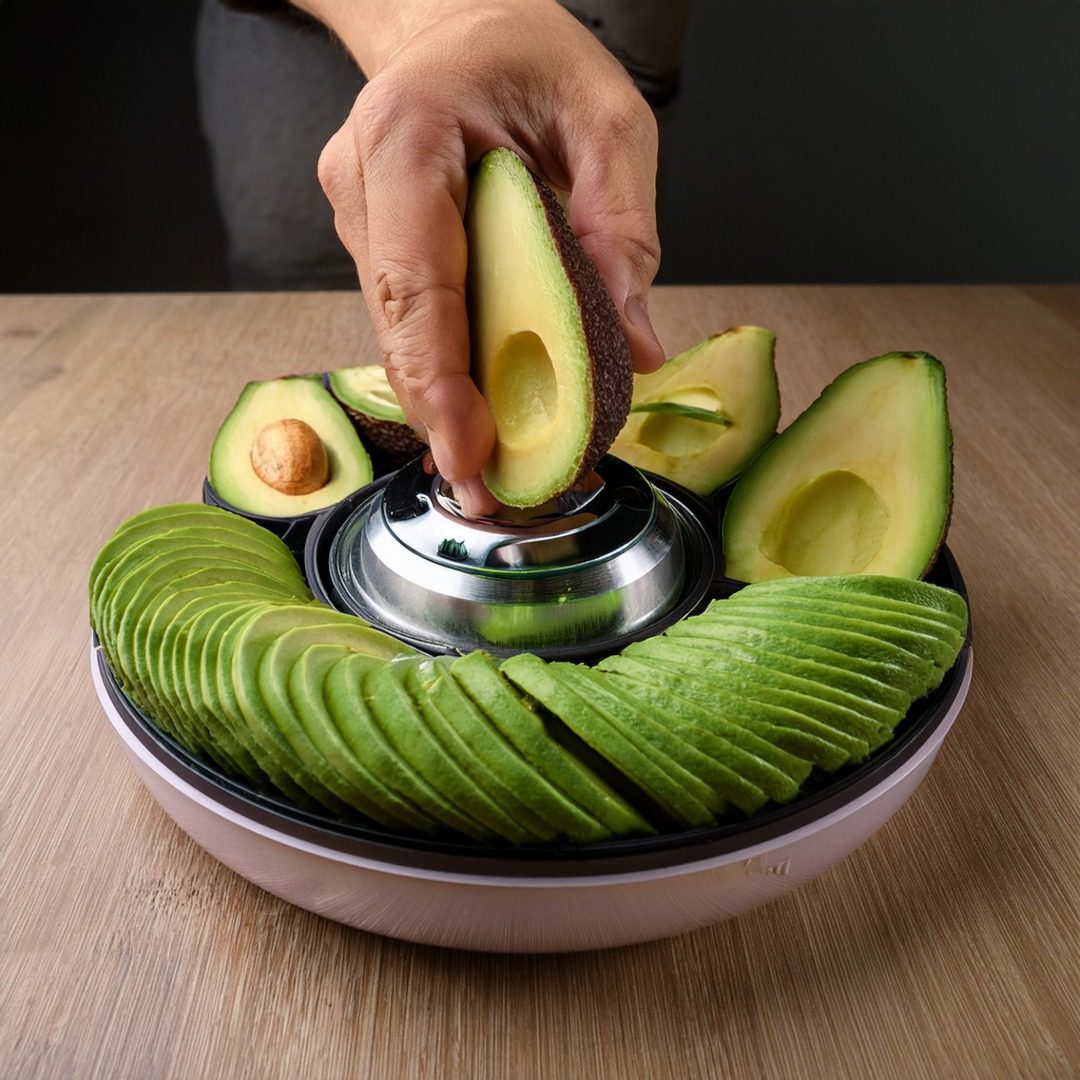
Why You Actually Need an Avocado Slicer (And How to Pick One That’s Actually Dishwasher Safe)
Avocados are everywhere now. Toast, salads, smoothie bowls, tacos—you name it.
But prepping them is annoying. The pit removal is awkward. The slicing never looks uniform. And somehow you always end up with brown gunk under your fingernails.
An avocado slicer dishwasher safe enough to actually use regularly solves all of this. Not just the cutting part, but the cleanup that makes you avoid using tools in the first place.
The Problem With Prepping Avocados by Hand
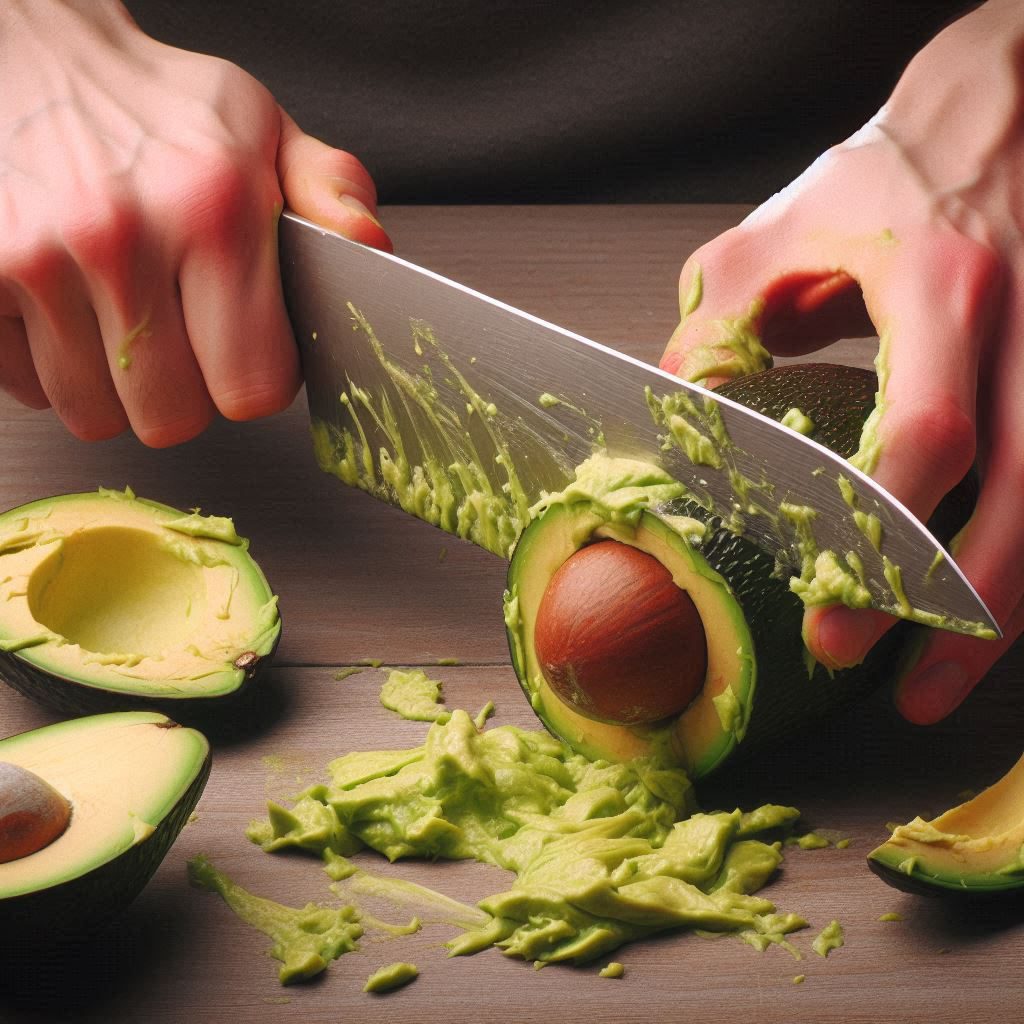
Let’s be real about what happens when you prep avocados the traditional way.
You cut it in half. Then you’re doing that weird knife-tap thing to get the pit out, hoping you don’t stab yourself or send the pit flying across the kitchen.
Next, you’re trying to scoop out the flesh without mangling it. Half the time it comes out in chunks instead of nice slices.
If you want actual uniform slices for toast or salads, you’re doing more knife work. More cuts mean more chances for the avocado to oxidize and turn brown.
And the cleanup? Avocado residue on your knife, cutting board, and hands. That oily film that doesn’t want to wash off easily.
It’s not difficult exactly. Just tedious enough that you sometimes skip avocados even when you want them.
What Makes a Good Avocado Slicer
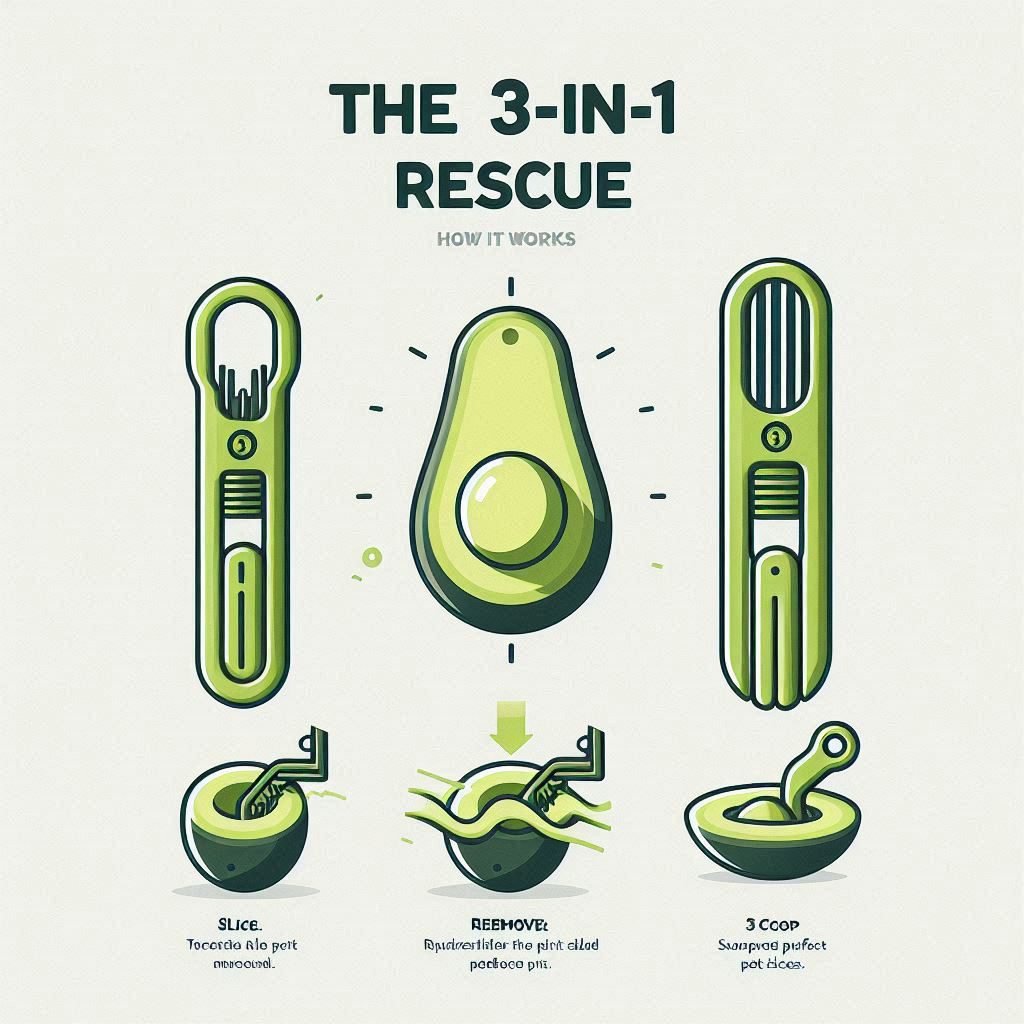
Not all avocado slicers are created equal. Some are gimmicky junk that sits in your drawer unused. Others actually change how you prep avocados.
Here’s what separates the good from the garbage.
It Needs to Actually Be Dishwasher Safe
This is the big one. Manufacturers love slapping “dishwasher safe” on products that technically survive the dishwasher but come out gross.
Real dishwasher safety means:
- The plastic doesn’t warp in the heat
- The metal parts don’t corrode or rust
- Food residue actually comes off in the wash
- It doesn’t develop weird smells after multiple cycles
If you have to hand-wash it every time because the dishwasher doesn’t really clean it, what’s the point? You’re not saving any effort.
Look for avocado slicers made from high-quality nylon or BPA-free plastic with stainless steel components. These materials handle repeated dishwasher cycles without falling apart.
The Pit Remover Has to Actually Work
Most avocado slicers include a pit removal feature. Usually it’s a serrated loop or a curved blade.
The good ones grip the pit securely and twist it out with minimal effort. The bad ones slip around and you end up fishing the pit out with your fingers anyway.
The serrations matter here. Smooth edges don’t grip. You need those teeth to bite into the pit.
And the loop size is important too. Too small and it won’t fit larger pits. Too big and it doesn’t grip smaller ones.
The Slicer Blades Should Be Sturdy
Those thin wire blades on cheap slicers? They bend. Sometimes they break.
You want blades that are thick enough to push through a ripe avocado without flexing. But not so thick that they mangle the fruit.
Stainless steel is ideal. Some high-quality plastic blades work too, but metal tends to stay straighter longer.
The spacing between blades determines your slice thickness. Most slicers give you medium-thick slices, which works for most uses.
It Should Feel Comfortable to Hold
You’re applying pressure to push through the avocado. If the handle is uncomfortable or the grip is awkward, it’s frustrating to use.
Look for ergonomic handles with some texture or grip. Smooth plastic gets slippery when it’s covered in avocado oil.
The overall size matters too. Too small and it’s hard to control. Too large and it doesn’t fit in your utensil drawer.
How to Use an Avocado Slicer Properly
Even with a good tool, technique matters. Here’s how to get perfect results every time.
Step 1: Cut and Open the Avocado
Use a regular knife to cut around the avocado lengthwise. You’re cutting through to the pit, not trying to go through it.
Twist the halves in opposite directions to separate them. One half will have the pit, one won’t.
This is basic stuff, but starting right makes everything else easier.
Step 2: Remove the Pit
Take the half with the pit and position your slicer’s pit remover over it. The serrated edge should be facing the pit.
Press down firmly so the teeth bite into the pit. Then twist.
The pit should pop right out, stuck in the slicer. Tap it over your trash or compost to knock it loose.
If your pit is stubborn, don’t force it. Sometimes pits are slippery or the avocado is too ripe. Just use your fingers or a spoon as backup.
Step 3: Slice the Avocado
Place the slicer’s blade section against the avocado flesh. Line it up so the blades run lengthwise for long slices.
Push down firmly and evenly. The blades should glide through the flesh and stop at the skin.
Lift the slicer out. You’ve got perfectly uniform slices ready to scoop out.
Step 4: Scoop and Serve
Use a large spoon to scoop under all the slices at once. They should come out together, maintaining their shape.
Or if you’re making guacamole, just scoop them straight into your bowl.
Step 5: Clean It Immediately
This is where dishwasher safety really matters.
Rinse the slicer quickly under water to get the big chunks off. Then toss it in the dishwasher.
Don’t let avocado residue dry on there. It gets sticky and annoying to clean later.
If you hand wash, use hot soapy water and a brush to get between the blades. But honestly, if your slicer is truly dishwasher safe, just use the dishwasher.
Why Dishwasher Safety Actually Matters
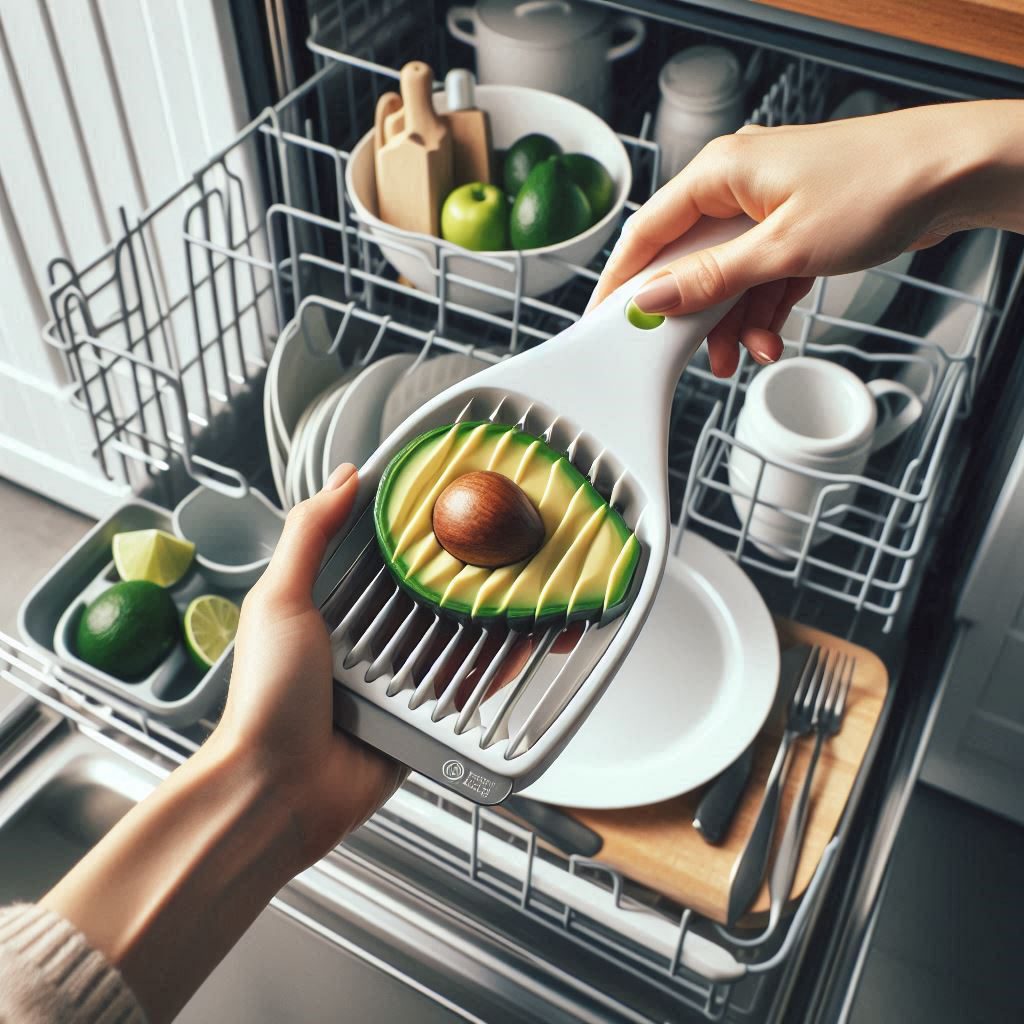
You might think this is a small detail. It’s not.
Tools that aren’t really dishwasher safe become tools you don’t use. Because who wants to hand-wash a weird multi-blade gadget when you’re already doing dishes?
It ends up in the back of your drawer. You go back to using a knife. And you’ve wasted money on something that sounded convenient but wasn’t.
A truly dishwasher safe avocado slicer gets used regularly. Because the cleanup is zero effort. Rinse, load dishwasher, done.
This is especially true if you’re meal prepping. Slicing avocados for the whole week? You want that tool to be easy to clean multiple times.
What to Look for When Shopping
When you’re comparing avocado slicers, here’s your checklist.
Material quality: High-grade plastic or nylon for the body. Stainless steel for the blades and pit remover.
Actual dishwasher safe rating: Check reviews, not just the product description. Real users will tell you if it survives the dishwasher.
One-piece vs. multi-piece design: Fewer pieces usually means easier cleaning. But some multi-piece designs separate specifically for better dishwasher cleaning.
Blade spacing: Look at the gap between blices. Wider spacing works better for chunky guacamole. Narrower spacing is better for pretty avocado toast.
Comfort: If you can, hold it before buying. Or at least look at detailed photos of the grip area.
Size: Make sure it fits in your utensil drawer or wherever you plan to store it.
Common Problems and How to Avoid Them
Even with a good slicer, things can go wrong. Here’s how to troubleshoot.
The Pit Won’t Come Out
Your avocado might be overripe and the pit is sliding around. Or underripe and the pit is gripping the flesh too tight.
Don’t force it. You’ll break your slicer or send the pit flying.
Just use a spoon to pop it out instead. The pit remover works most of the time, not all the time.
The Slices Are Mushy
This means your avocado is too ripe for clean slicing. The flesh is breaking down.
You can still use the slicer, but the slices won’t hold their shape. This is fine for guacamole or spreading on toast.
For picture-perfect slices, use slightly firmer avocados.
The Slicer Gets Stained
Avocados oxidize and turn brown. Sometimes this stains light-colored plastic.
It’s cosmetic but annoying. To prevent it, clean your slicer right away. Don’t let avocado residue sit on there for hours.
If it’s already stained, a paste of baking soda and water usually helps. Scrub gently and rinse.
Food Gets Stuck Between the Blades
This is why dishwasher safety matters. A good dishwasher should blast out anything stuck between blades.
If you’re hand washing, use a small brush or run water through the blade section forcefully.
Some slicers have blades that separate for easier cleaning. These are worth considering if you hand wash everything.
Beyond Avocado Toast: What Else You Can Do
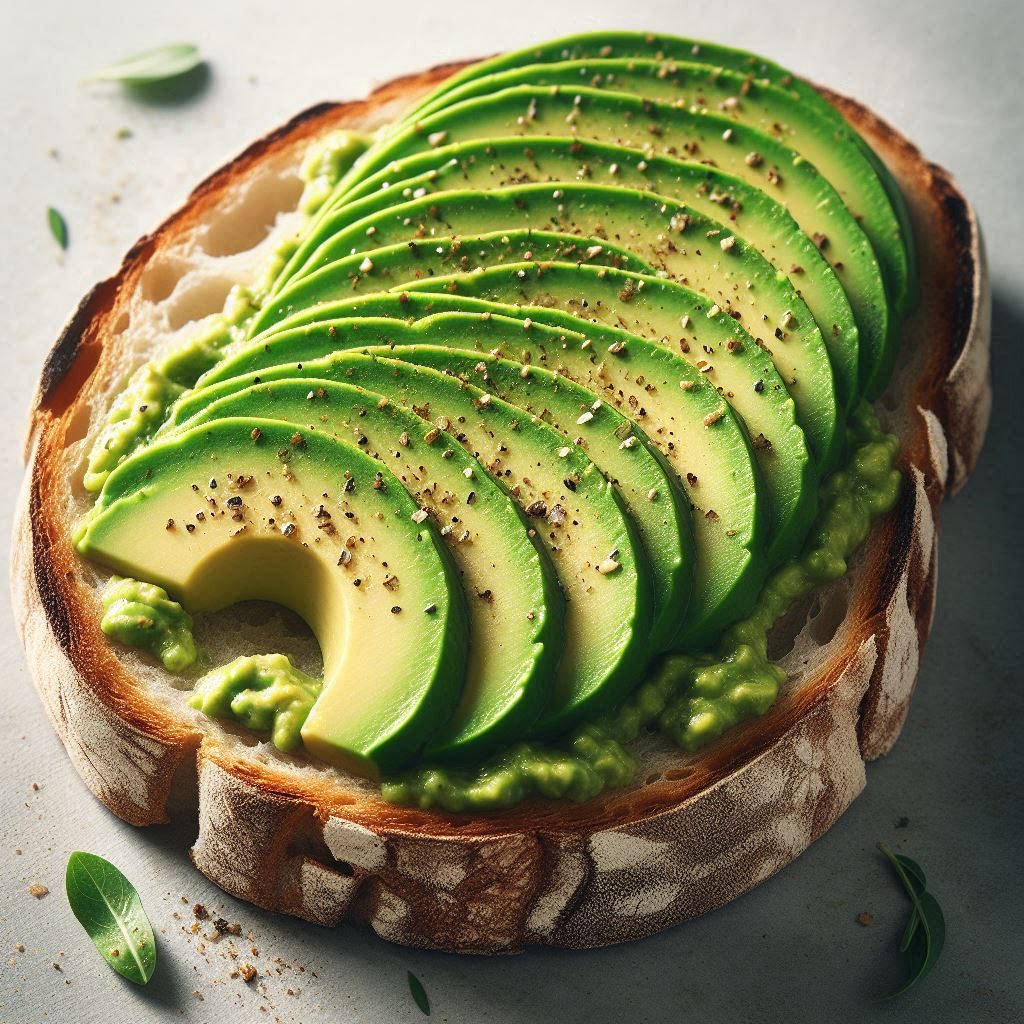
An avocado slicer isn’t just for toast. Though honestly, that alone would justify the purchase.
Salads: Perfect uniform slices that look professional. Way better than chunky knife-cut pieces.
Tacos: Slice avocados directly over your tacos for quick topping.
Sushi bowls: Those pretty arranged slices you see at restaurants? Yeah, you can do that now.
Smoothie prep: Slice avocados for freezing. Frozen avocado slices blend smoothly and add creaminess to smoothies.
Guacamole: Use the slicer, then mash. Still faster than scooping with a spoon and mashing chunky pieces.
Avocado fries: Slice them thick, bread them, and bake. The uniform slices cook evenly.
Meal prep: Slice a bunch of avocados at once for the week. Store with lemon juice to slow browning.
The Truth About Avocado Gadgets
Let’s address the elephant in the room. Some people think avocado slicers are unnecessary gadgets.
And look, you can definitely prep avocados with just a knife and spoon. People have been doing it for years.
But that’s like saying you don’t need a garlic press because you can mince garlic with a knife. Technically true. Practically, one is way faster and easier.
The question isn’t whether you can live without it. The question is whether it makes your life easier.
If you eat avocados regularly, a good slicer saves you time and frustration. The pit removal alone is worth it.
If you eat avocados once a month, maybe skip it. But for regular avocado eaters, it’s legitimately useful.
How to Care for Your Avocado Slicer Long-Term
Even dishwasher safe tools benefit from a little care.
Don’t leave it sitting in water. Even stainless steel can develop water spots or corrosion with extended soaking.
Check for damage periodically. Look at the blades for bending or breaking. Check the pit remover teeth for wear.
Store it properly. Don’t bury it under heavy pots that might bend the blades. A utensil drawer or hanging on a hook works well.
Replace when necessary. If the blades get dull or the pit remover stops gripping, it’s time for a new one. These aren’t expensive tools. Better to replace it than struggle with a worn-out one.
Comparing Different Styles
There are a few common designs for avocado slicers. Each has pros and cons.
3-in-1 style: Splits, pits, and slices with different sections of the same tool. Most popular and most versatile.
Y-peeler style with pit remover: Works like a vegetable peeler. Creates thinner, more delicate slices. Takes longer but gives you more control.
Fan-blade style: Multiple blades in a fan shape that slice through the whole avocado at once. Fast but less control over slice thickness.
Simple pit remover only: Just removes the pit, you handle the rest yourself. Good if you only struggle with pit removal.
For most people, the 3-in-1 style offers the best balance of functionality and convenience. And if it’s dishwasher safe, you’re set.
Is It Worth the Money?
Decent avocado slicers cost between $8 and $15. High-end ones might hit $20.
For that price, you’re getting:
- Faster avocado prep
- Safer pit removal (fewer knife accidents)
- More uniform slices
- Less mess overall
If you eat avocados weekly, this pays for itself in saved time within a few months.
If you rarely eat avocados, you probably don’t need a specialized tool.
The key is finding one that’s actually dishwasher safe so you use it regularly instead of letting it collect dust.
The Bottom Line
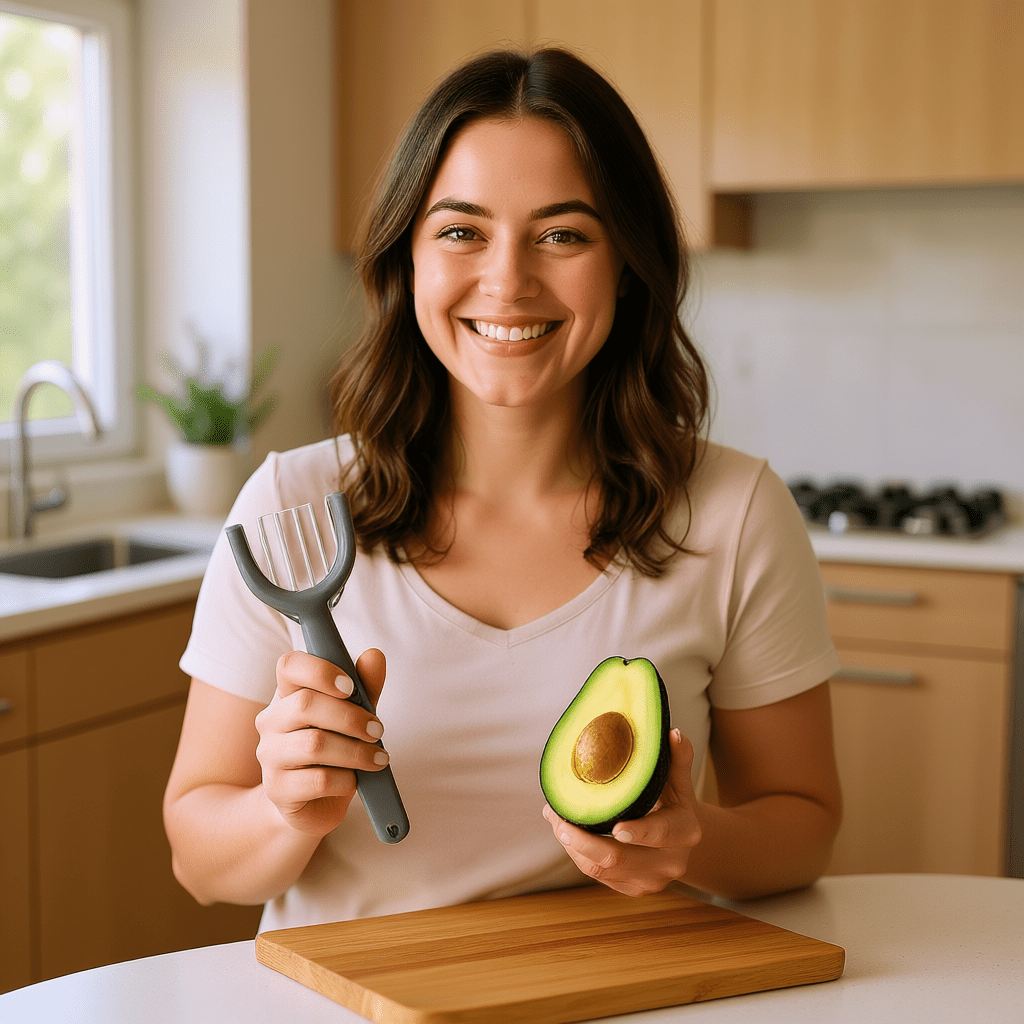
Avocado slicers aren’t essential. But they’re one of those tools that makes a repetitive task significantly easier.
The trick is getting one that’s actually dishwasher safe—not just technically, but practically. One that comes out of the dishwasher clean and ready to use again.
Look for quality materials, sturdy construction, and good reviews from people who actually use their dishwashers.
Then prepping avocados goes from a minor annoyance to something you barely think about. And you’ll probably end up eating more avocados because they’re easier to deal with.
Which, given how healthy and delicious they are, isn’t a bad outcome.