
The Ultimate Guide to Knife Maintenance
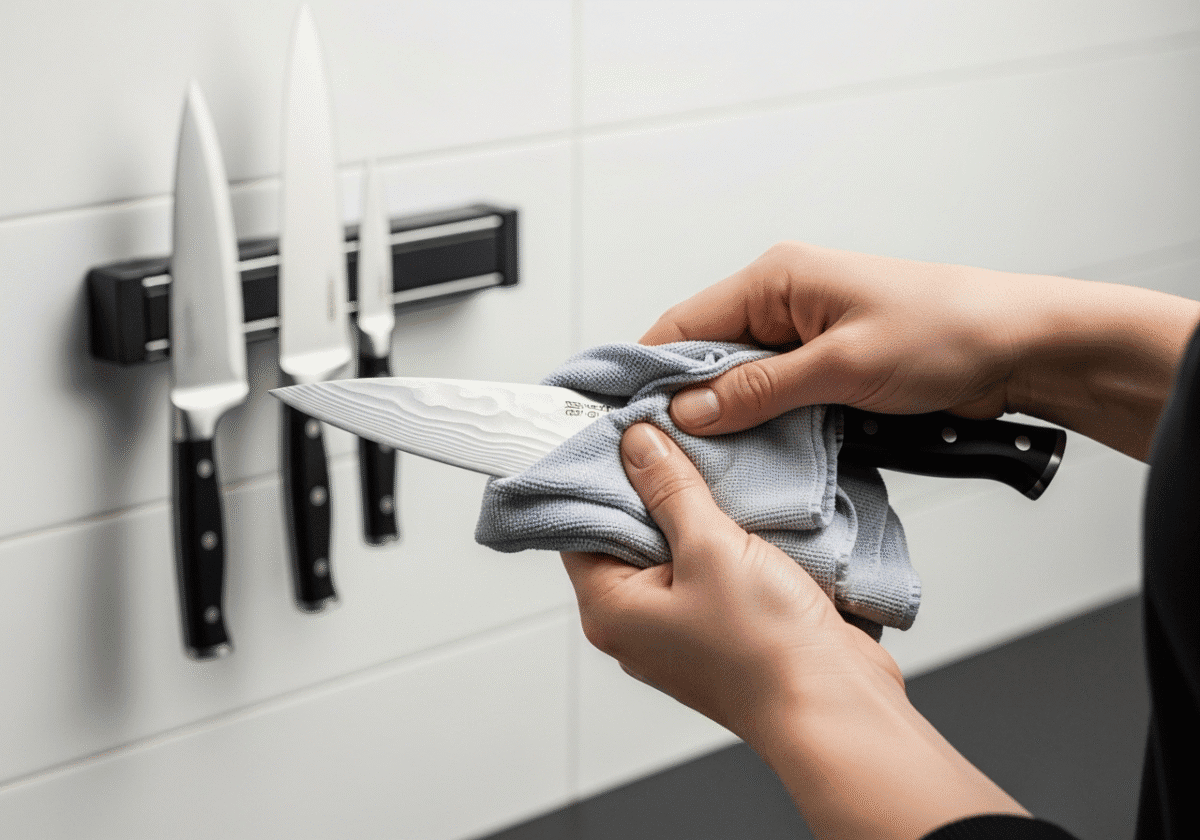
Your knives are probably the most-used tools in your kitchen. But if you’re like most people, you’re also probably ruining them without realizing it.
Dull blades, rust spots, loose handles—these don’t just happen randomly. They’re the result of how you use, clean, and store your knives every single day.
The good news? Proper knife maintenance isn’t complicated or time-consuming. You just need to know what actually matters and what’s just noise.
Why Most People’s Knives Are Dull
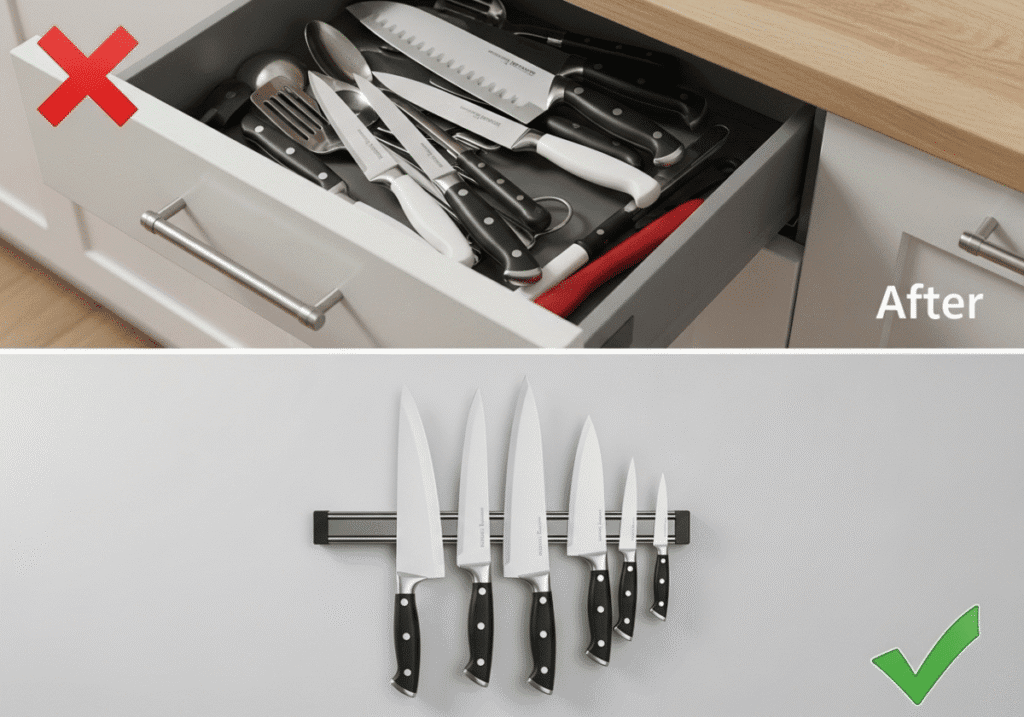
Let’s start with the biggest problem. Your knives aren’t staying sharp because of how you’re storing them.
Tossing knives in a drawer with spatulas, can openers, and other utensils? Every time that drawer opens and closes, your knife edges are getting dinged up.
That’s metal hitting metal hundreds of times. The edge gets microscopic chips and rolls that you can’t see but definitely feel when you’re trying to slice a tomato.
The solution isn’t complicated. Get your knives out of the drawer.
The best magnetic knife holder for small kitchen spaces solves this problem completely. Your knives hang on the wall, edges protected, not touching anything else.
Plus, in small kitchens where counter space matters, wall-mounting your knives frees up room for actual cooking. No bulky knife block eating up precious workspace.
The Difference Between Honing and Sharpening
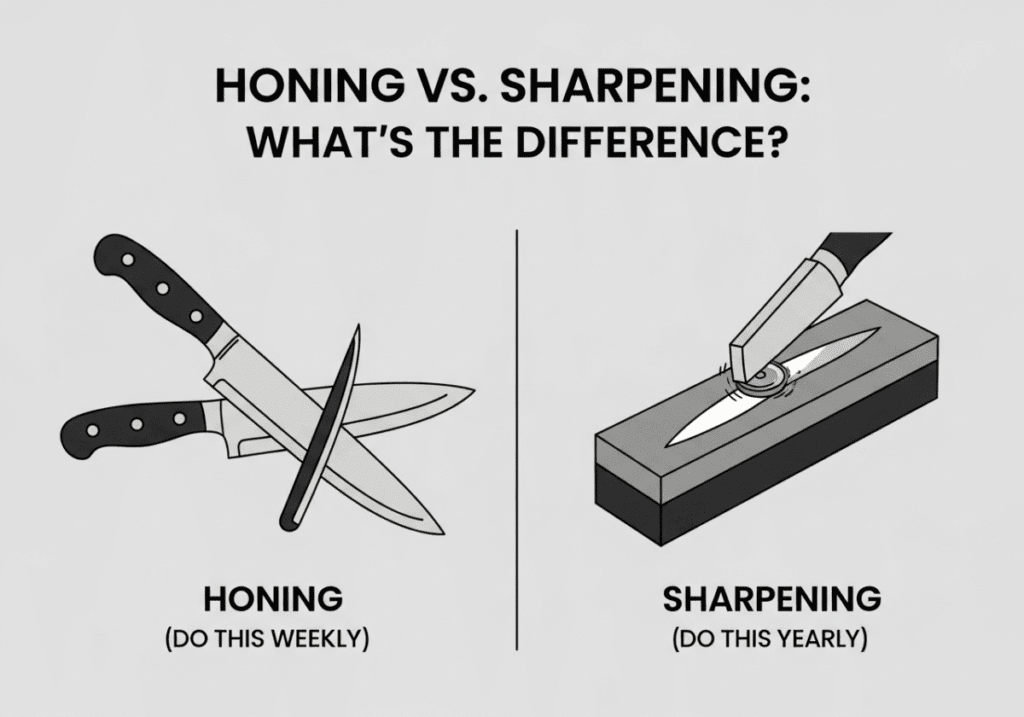
Most people use these terms interchangeably. They’re not the same thing at all.
Honing realigns the edge of your knife. Over time, the microscopic teeth on your blade bend out of alignment. A honing steel straightens them back up.
You should hone your knives regularly—like every few uses. It takes 30 seconds and keeps your edge working properly between actual sharpenings.
Sharpening removes metal to create a new edge. This is what you do when honing doesn’t help anymore and your knife is actually dull.
You only need to sharpen knives a few times a year if you’re honing regularly and storing them properly.
Think of honing like brushing your teeth. Sharpening is like going to the dentist. You need both, but one happens way more often.
How to Hone Your Knives Properly
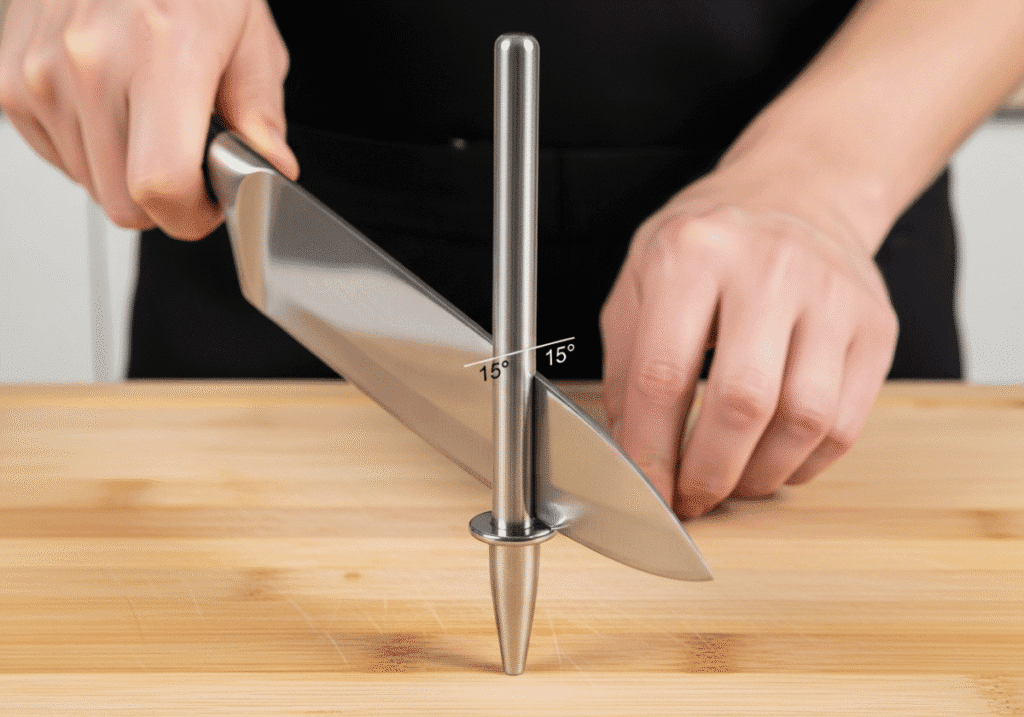
Get yourself a honing steel. It’s that long rod thing that came with your knife set that you’ve never used.
Hold the steel vertically with the tip resting on a cutting board or towel. This keeps it stable.
Place your knife against the steel at a 15-20 degree angle. You don’t need to measure this. Just imagine the blade is trying to slice a thin piece off the steel.
Draw the knife down and across the steel in one smooth motion, from heel to tip. Apply light pressure—you’re not trying to grind anything off.
Now do the other side. Alternate sides for about 5-6 strokes each.
That’s it. Your edge is realigned and ready to work properly again.
Do this every few times you cook and your knives will stay sharp way longer.
When Your Knives Actually Need Sharpening
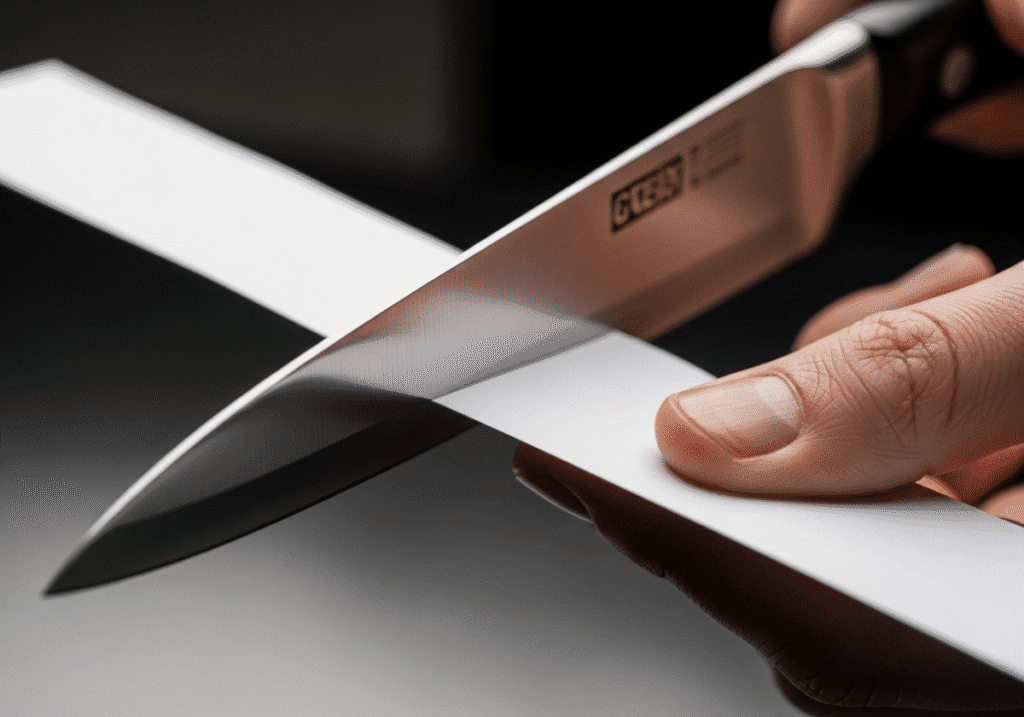
Honing stops working eventually. The edge gets so worn down that realigning it doesn’t help anymore.
Here’s how you know it’s time to sharpen:
The paper test: Try slicing through a piece of paper held vertically. A sharp knife cuts cleanly. A dull one tears or won’t cut at all.
The tomato test: Can you slice through a tomato skin without applying pressure? If you’re sawing or pushing, your knife is dull.
The onion test: Dull knives crush onion cells instead of cutting them cleanly. More crushing means more tears.
If honing doesn’t fix these problems, it’s time for actual sharpening.
Sharpening Options That Actually Work
You’ve got a few choices here. Pick the one that matches your comfort level and budget.
Professional Sharpening
The easiest option. Take your knives to a professional sharpener once or twice a year.
Most kitchen stores offer this service. Some farmer’s markets have sharpening services too. Costs around $5-10 per knife.
They’ll do it right, you don’t have to learn anything, and your knives come back legitimately sharp.
Electric Sharpeners
Good ones cost $50-150. Bad ones ruin your knives by removing too much metal.
If you go this route, get a quality brand like Chef’sChoice or Work Sharp. Follow the instructions exactly.
The benefit is speed and consistency. The downside is you still need to learn the right technique and these can be aggressive on your blades.
Whetstones
This is the traditional method. Also the most intimidating for beginners.
You soak the stone, hold your knife at the right angle, and push or pull it across the stone to remove metal and create a new edge.
Takes practice to get good at it. But once you learn, you have complete control and it costs almost nothing after buying the stone.
YouTube has hundreds of tutorials. It’s less scary than it looks.
Pull-Through Sharpeners
The $10-20 gadgets you drag your knife through a few times.
These work okay for basic maintenance. But they’re not precise and they remove more metal than necessary.
Fine for cheap knives. Not ideal for anything you actually care about.
How You’re Destroying Your Knives Without Realizing It
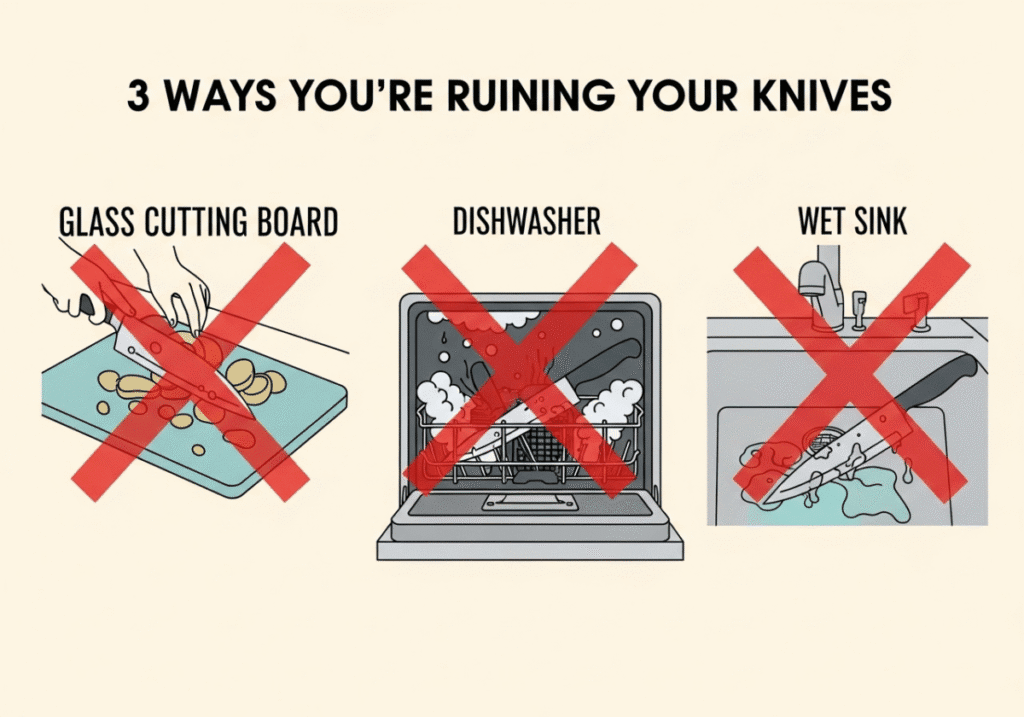
Storage is one issue. But there are other things you’re probably doing that slowly ruin your knives.
Using Glass or Ceramic Cutting Boards
These look nice. They’re also terrible for your knife edges.
Glass and ceramic are harder than knife steel. Every time you cut on them, you’re dulling your blade.
Use wood or plastic cutting boards. Save the pretty glass boards for serving cheese or whatever.
Your knives will stay sharp way longer.
Putting Knives in the Dishwasher
I know the manufacturer says “dishwasher safe.” They’re lying to make the sale.
The harsh detergents, high heat, and jostling around in there are all bad for your knives.
The edges bump into other utensils. The handles get damaged. Wood handles especially will crack and split.
Hand wash your knives. Takes 20 seconds. Dry them immediately. Done.
Cutting on Metal Surfaces or Plates
Same principle as glass cutting boards. You’re hitting metal with metal.
If you’re cutting something that’s already on a plate, transfer it to a cutting board first.
Or better yet, prep everything on the board before plating.
Leaving Knives Dirty or Wet
Food acids (like tomato or lemon) sitting on your blade? That causes corrosion and staining.
Water left on the blade? That’s how rust starts, especially near the handle.
Wash your knife right after using it. Dry it completely. Then put it away properly.
This takes an extra 30 seconds and prevents years of damage.
Proper Knife Storage Makes Everything Easier
We already talked about drawer storage being terrible. But let’s dig into why proper storage matters so much.
When your knives are stored correctly, they:
- Stay sharper longer because edges aren’t getting damaged
- Are immediately accessible when you need them
- Take up less space in small kitchens
- Don’t pose a safety hazard when you reach for something
A magnetic knife holder mounted on your wall checks all these boxes.
The magnets hold the blade securely. The edges aren’t touching anything. You can see exactly which knife you’re grabbing.
And in kitchens where counter space is limited, this is a game-changer. That bulky knife block was taking up room you actually need for cooking.
Wall space is usually underutilized in small kitchens. Put it to work.
What About Knife Blocks?
Knife blocks aren’t terrible. They’re just not ideal.
The slots can trap moisture and food particles. That leads to bacterial growth and eventually rust.
The knives sit touching the wood, which can dull edges over time if the slots aren’t perfectly smooth.
And they take up significant counter space that could be used for meal prep.
If you’ve already got a knife block and it works for you, fine. Just make sure to:
- Clean it regularly
- Insert knives with the spine down, not the edge
- Make sure it’s completely dry before putting knives back
But if you’re setting up a new kitchen or looking to optimize space, magnetic storage is the better choice.
Handling Different Knife Types
Different knives need slightly different care.
Carbon Steel Knives
These get sharper than stainless steel. But they also rust more easily and develop patina.
Dry them immediately after washing. Consider oiling the blade occasionally if you live in a humid climate.
The patina (that dark coloring) is normal and actually protective. Don’t try to scrub it off.
Stainless Steel Knives
More forgiving. Rust-resistant. Harder to sharpen to the same level as carbon steel.
Still need proper storage and regular honing. Just more tolerant of mistakes.
Ceramic Knives
Super sharp out of the box. Stay sharp for a long time. But brittle and prone to chipping.
Never use on hard surfaces. Don’t try to cut through bones. Store them very carefully.
Can’t be honed at home. Need professional sharpening when they dull.
Serrated Knives
These don’t need sharpening as often because the serrations protect the edge.
When they do need it, take them to a professional. Sharpening serrated edges requires special tools.
Still need proper storage to prevent damage to those teeth.
Signs Your Knife Needs Professional Help
Sometimes maintenance isn’t enough and you need expert intervention.
Chips in the blade: Small nicks need to be ground out. Don’t try this yourself unless you really know what you’re doing.
Rust that won’t come off: Surface rust you can often remove with a little oil and gentle scrubbing. Deep rust needs professional treatment.
Loose handles: These can sometimes be tightened. But if they’re really loose or cracked, a professional should look at it.
Bent tips: Don’t try to bend them back yourself. You’ll likely break the blade.
A good knife repair person can fix most of these issues. And it’s usually cheaper than buying new knives.
The Basic Maintenance Routine That Actually Works
Here’s what consistent knife care looks like in real life.
After every use:
- Wash by hand with dish soap and water
- Dry completely with a towel
- Return to proper storage (magnetic holder, not drawer)
Every 3-5 uses:
- Run through honing steel
- Takes 30 seconds, keeps edge aligned
Every 6-12 months:
- Professional sharpening or sharpen yourself if you know how
- Inspect for damage, rust, or loose handles
As needed:
- Deep clean if food is stuck anywhere
- Oil carbon steel blades if you live in humid climates
- Check that magnetic holder is still secure on wall
That’s it. No complicated schedules or expensive products. Just consistent basic care.
Small Kitchen Storage Solutions
In small kitchens, every inch matters. Your knife storage should work with your space, not against it.
Wall-mounted magnetic holders are the obvious choice. But placement matters.
Mount it near your main prep area. Not above the stove where grease can accumulate on the blades.
Neither too high where shorter people can’t reach. Not too low where kids might grab something dangerous.
Eye level or slightly below is usually perfect. Easy to reach, easy to see, out of the way.
Some people worry about knives being visible and “exposed.” But honestly, it’s safer than reaching into a drawer full of sharp things you can’t see.
Plus, when you can see your knives, you actually use them. The right tool for each job instead of just grabbing whatever.
Common Myths About Knife Care
Let’s clear up some misconceptions.
“More expensive knives don’t need maintenance.” Wrong. Expensive knives need the same care as cheap ones. They just start with better steel.
“Dishwashers are fine for knives.” No. Just no. Hand wash everything.
“You should sharpen knives all the time.” Also wrong. Over-sharpening removes unnecessary metal and shortens your knife’s lifespan. Hone regularly, sharpen occasionally.
“Honing steels sharpen knives.” Nope. They realign the edge. Different process entirely.
“Knives last forever with proper care.” They last a very long time, but not forever. Eventually you’ll sharpen away enough metal that the blade geometry changes.
The Bottom Line
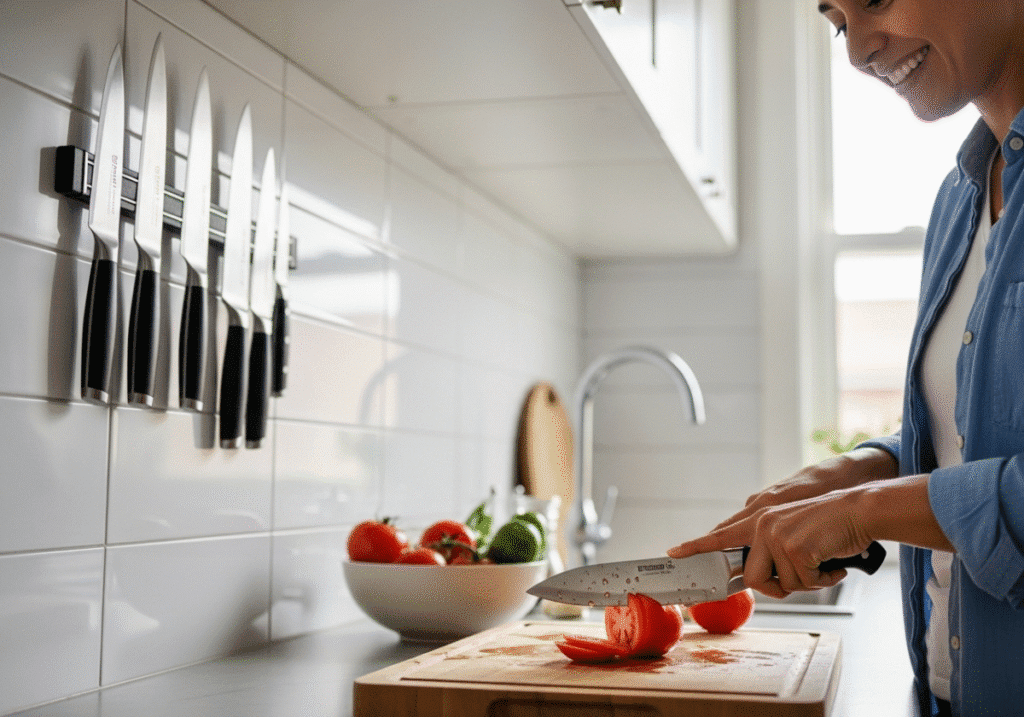
Knife maintenance isn’t complicated. But it does need to be consistent.
Store your knives properly—on a magnetic holder, not in a drawer. This alone solves most edge damage issues.
Hone regularly with a steel. Sharpen occasionally when honing stops working.
Hand wash, dry immediately, put away properly.
That’s basically it. Do these things consistently and your knives will stay sharp, functional, and safe for years.
And in small kitchens where space is precious, proper storage means your knives are protecting themselves while freeing up room for actual cooking.
Your knives are your most important kitchen tools. They deserve better than being thrown in a drawer with the potato masher.
My Top Knife Maintenance Essentials
Here are the specific products I use and recommend to keep my knives in perfect shape. As an Amazon Associate, I earn from qualifying purchases.
- 🪨 Whetstone for Sharpening: King Japanese Whetstone (1000/6000 Grit)
- 🔪 Honing Steel for Alignment: Victorinox Honing Steel
- 🗲️ Cutting Board (Wood): John Boos Maple Edge Grain Board
- 🧲 Safe Knife Storage: Messermeister Magnetic Knife Strip
2 thoughts on “The Ultimate Guide to Knife Maintenance”