
How to Stop Crying While Chopping Onions

You know the drill. You’re making dinner, everything’s going fine, and then you grab an onion.
Five seconds into chopping and your eyes are burning. Tears streaming down your face. You can’t see what you’re cutting anymore.
It’s annoying at best and dangerous at worst. But here’s the good news—you don’t have to live like this anymore.
Why Onions Make You Cry (The Science Part)
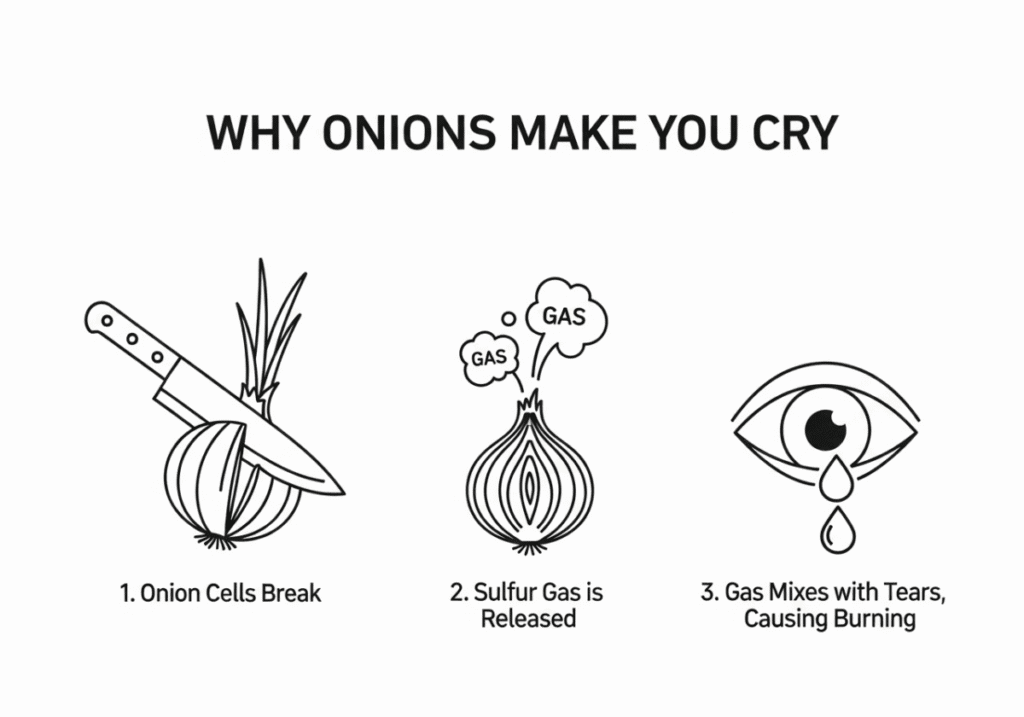
When you cut into an onion, you’re breaking its cell walls. This releases enzymes that react with sulfur compounds inside the onion.
The result? A gas called sync-propanetriol-S-oxide. Try saying that five times fast.
This gas floats up toward your face. When it hits your eyes, it reacts with the water there and forms sulfuric acid. Yeah, actual acid.
Your eyes don’t love acid. So they produce tears to flush it out. And suddenly you’re crying over your dinner prep.
The more you cut, the more gas gets released. Which is why dicing a whole onion is way worse than just cutting it in half.
The Methods That Actually Work
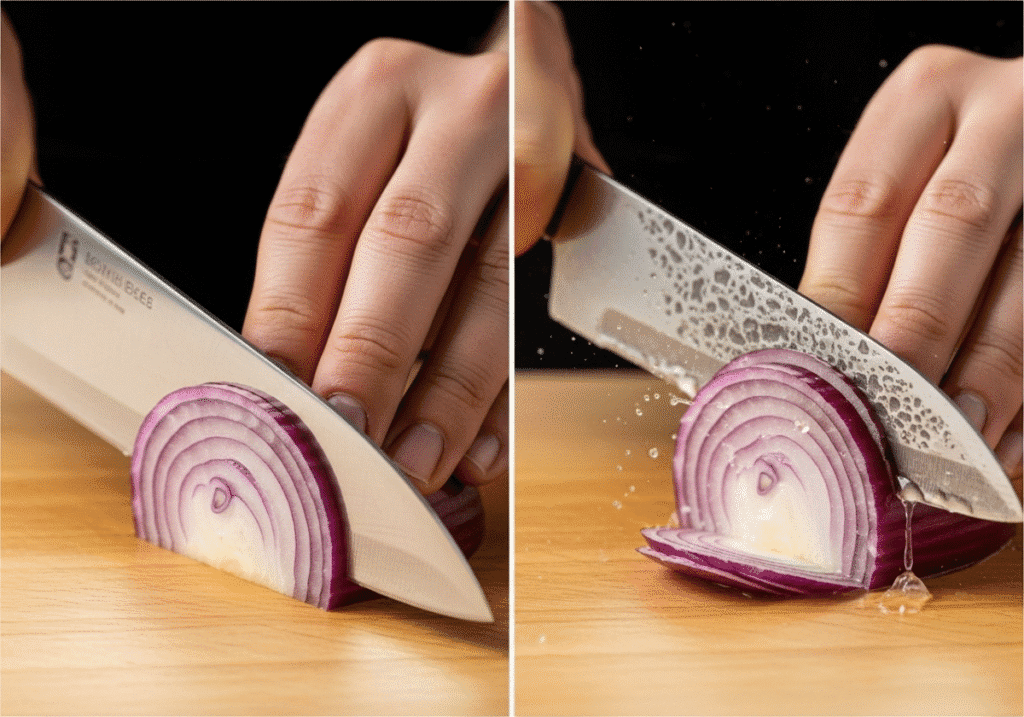
Let’s talk about what really helps. Not internet myths or old wives’ tales. Just stuff that actually stops the tears.
Sharp Knives Change Everything
This is probably the single most important factor. And it relates directly to why you need proper knife storage.
A sharp knife makes clean cuts through the onion cells. Less cell damage means less gas released. Simple as that.
A dull knife? It crushes and tears the cells instead of slicing them. You’re releasing way more of that tear-inducing gas with every cut.
This is where having the best magnetic knife holder for small kitchen spaces pays off. Your knives stay sharp because they’re not banging against other utensils in a drawer.
They’re stored properly, edges protected, always ready to make clean cuts through onions without turning you into a sobbing mess.
In small kitchens, counter space is precious. You can’t waste it on a bulky knife block. But wall-mounting a magnetic holder? That keeps your sharpest knives accessible without eating up the counter.
Chill Your Onions First
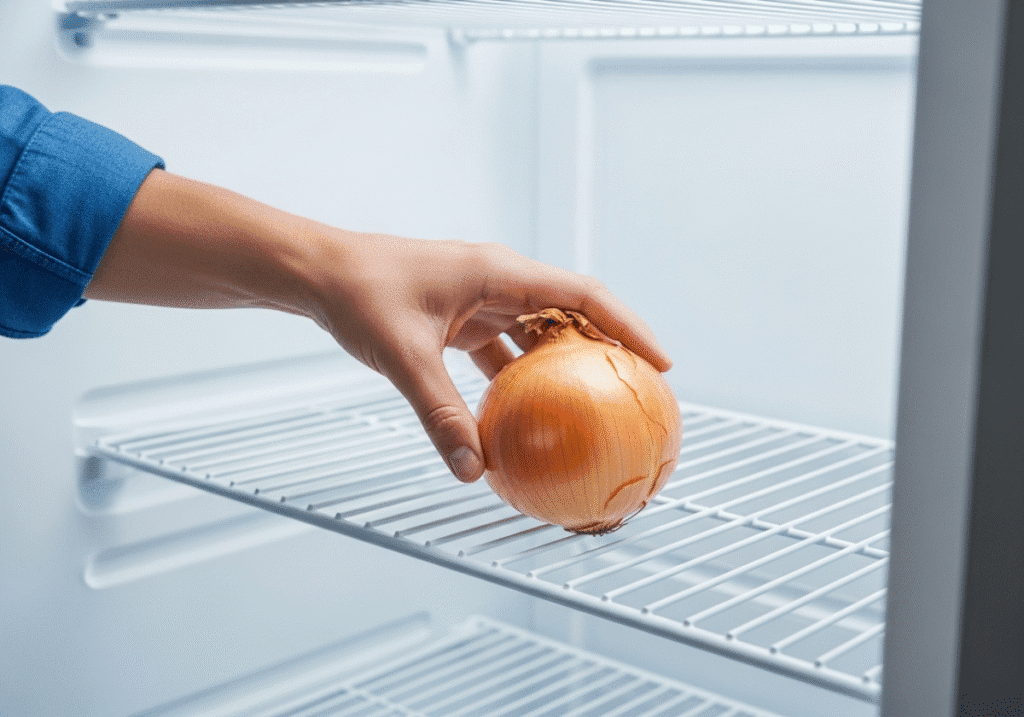
Cold slows down those enzymes. It doesn’t stop them completely, but it definitely helps.
Stick your onion in the fridge for 30 minutes before cutting. Or if you forgot, toss it in the freezer for 10-15 minutes.
Don’t freeze it solid though. You’re not trying to make onion popsicles. Just cold enough to slow the chemical reaction.
The gases still release, but they move slower and don’t reach your eyes as quickly. You’ll get through most of the chopping before any tears start.
Cut Near Running Water or Steam
Water absorbs the gas before it reaches your eyes. Some people swear by cutting onions next to a running faucet.
Others say to boil water nearby and let the steam catch the gas. Both methods work on the same principle—the gas dissolves in water instead of floating to your face.
Personally, I think this is more trouble than it’s worth. But if you’re desperate and nothing else works, give it a shot.
Use a Food Processor or Chopper
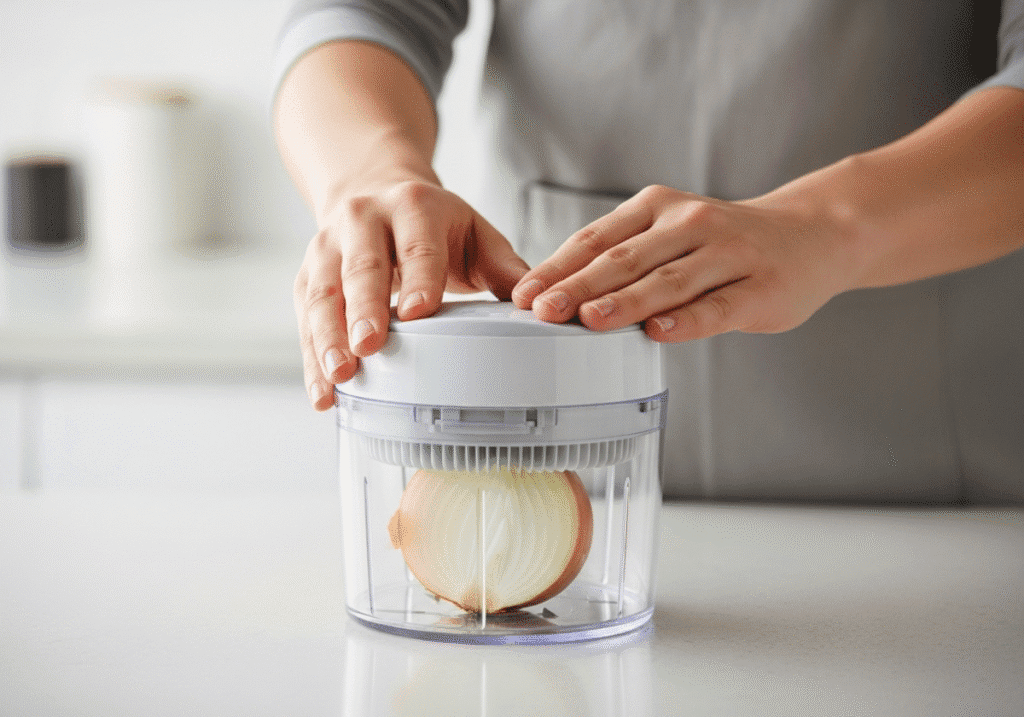
Sometimes the answer is just avoiding the problem entirely.
A vegetable chopper easy to clean is a game-changer for onions. You’re not hovering over the cutting board with your face right in the gas zone.
Toss the onion in, press down, and you’re done. The gases still release, but they’re contained in the chopper instead of floating directly into your eyes.
The key is finding one that’s actually easy to clean. Because if it’s a pain to wash, you won’t use it. And you’ll be back to crying over your cutting board.
Look for choppers where:
- The blades come out easily
- There aren’t a million tiny parts
- It’s dishwasher safe
- Onion smell doesn’t linger in the plastic
Clean it immediately after using and it takes like 30 seconds. Let it sit and onion residue gets everywhere.
Ventilation Matters More Than You Think
Turn on your kitchen exhaust fan. Open a window. Get air moving.
The gas needs somewhere to go. If you’re chopping in a closed kitchen with no airflow, all that gas just hangs around at face level.
Good ventilation pulls it away before it reaches your eyes. It’s not a complete solution, but it definitely helps.
In small kitchens especially, air can get stagnant fast. Moving that air around makes a real difference.
The Methods That Don’t Really Work
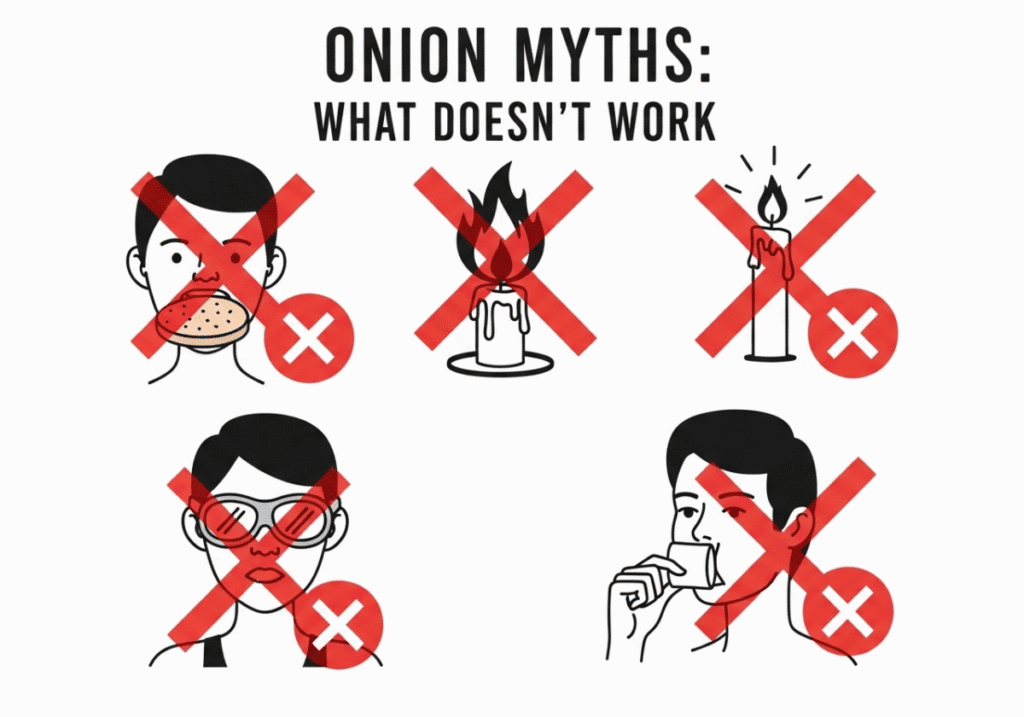
Let’s save you some time. Here are the popular suggestions that sound good but mostly don’t help.
Holding bread in your mouth: Supposedly absorbs the gas. Realistically just makes you look ridiculous while you’re still crying.
Lighting a candle near your cutting board: The flame burns some of the gas. But not enough to matter unless you’re cutting onions inside a circle of candles like some kind of ritual.
Wearing goggles: This actually does work if you get a good seal. But come on. You’re cooking dinner, not doing lab work.
Chewing gum: Another old myth. Chewing produces saliva, which supposedly absorbs gas through your mouth? Yeah, no.
Not cutting the root end: The root has higher concentrations of those sulfur compounds. But you still have to cut the rest of the onion, so this buys you maybe 10 seconds.
Save yourself the trouble and focus on methods that actually make a difference.
The Best Combination for Tear-Free Onions
Here’s what works consistently. Use all of these together and you’ll barely tear up at all.
Start with cold onions. Pull them straight from the fridge. This slows the enzymes significantly.
Use your sharpest knife. Not the one you use for everything. Your actual sharpest knife. The one you keep on your magnetic holder because you know it’ll do the job right.
Work fast. The longer the onion sits there cut open, the more gas builds up. Get it diced and into the pan quickly.
Turn on ventilation. Fan, window, whatever you’ve got. Just move that air.
Consider a vegetable chopper for bulk prep. If you’re dicing three onions for a recipe, just use the chopper. Save your eyes and your time.
This combination handles about 90% of the tears. You might still get a little watery toward the end, but nothing like before.
Why Proper Knife Storage Keeps You From Crying
This might seem like a weird connection. But stick with me.
When your knives are stored properly—like on a magnetic knife holder—they stay sharper longer. The edges don’t get dinged up from rattling around in drawers.
Sharp knives mean cleaner cuts. Cleaner cuts mean less cellular damage. Less damage means less gas released.
Plus, when your knives are visible and easy to grab, you actually use the sharp one instead of whatever’s closest.
In small kitchens, this matters even more. You don’t have room for a knife block taking up counter space. But you’ve got wall space that’s doing nothing.
Mount a magnetic holder, keep your best knives there, and you always have the right tool ready when it’s time to chop onions.
It’s not just about organization. It’s about having the tools that actually prevent the problem in the first place.
Different Onions, Different Levels of Tears
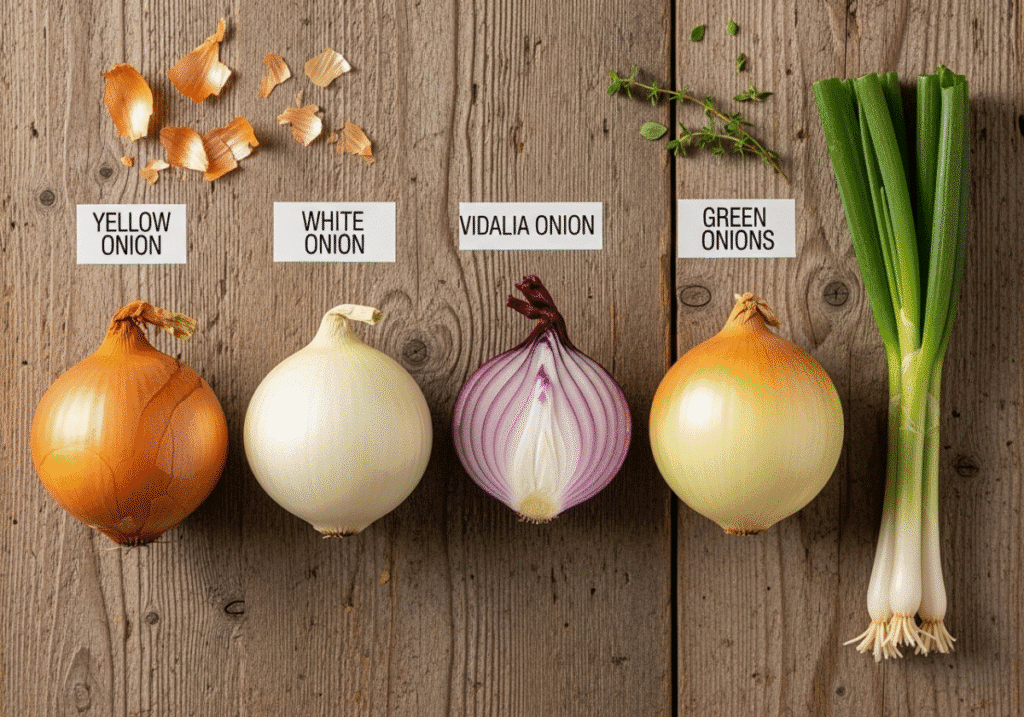
Not all onions are created equal when it comes to crying.
Yellow onions: The worst offenders. High sulfur content means maximum tears. These are the ones you really need your sharp knife for.
White onions: Similar to yellow but slightly less intense. Still enough to make you cry if you’re not careful.
Red onions: A bit milder. The sulfur content is lower, so they don’t produce as much gas.
Sweet onions (Vidalia, Walla Walla): Much easier on the eyes. Still some gas, but way less than regular yellow onions.
Shallots: Somewhere between red and sweet onions. Manageable without too much prep.
Green onions/scallions: Barely any reaction at all. The sulfur compounds are mostly in the bulb part, and there’s not much of it.
If you’re particularly sensitive, stick with red or sweet onions when you have a choice. Save the yellow onions for when you’ve got your cold-sharp-knife-good-ventilation system in place.
What to Do If You’re Already Crying
Okay, so you didn’t do any of the prep. The onion’s half-chopped and you’re already tearing up.
Step away for a minute. Walk out of the kitchen. Let your eyes recover. The gas dissipates pretty quickly once you stop cutting.
Rinse your knife. Some of the gas is stuck to the blade. A quick rinse under cold water helps.
Wash your hands. You’ve got onion juice on your fingers. Don’t rub your eyes. Seriously, don’t.
Run cold water over your wrists. This is an old trick, but it does help reset your system a bit.
Then go back and finish the job. Just work faster this time so you’re done before it builds up again.
Tools That Make Onion Prep Easier
Beyond knives and choppers, a few other tools can help.
A good cutting board: Bigger is better. You want room to work so you’re not hovering right over the onion.
A bowl of water nearby: Toss the diced onions in as you finish cutting. This stops the gas from continuing to release into the air.
Paper towels: Wipe your knife between cuts. Removes some of the onion residue and gas.
Proper lighting: You need to see what you’re doing. Especially if your eyes are watering and you’re trying to work fast.
In small kitchens, you’re probably working with limited space. So focus on the essentials—sharp knife, good board, and maybe a chopper for those times when you just can’t deal with tears.
The Long-Term Solution
The best way to stop crying while chopping onions? Build better habits around your knife maintenance and storage.
Keep your knives sharp. Store them properly so they stay that way. And actually use the sharp one when it’s time to cut onions.
A magnetic knife holder for your small kitchen wall does more than just save counter space. It keeps your knives ready, sharp, and accessible.
Then when you need to chop an onion, you grab the right tool. Make clean cuts. Work fast. And get it done without turning into a crying mess.
The Bottom Line

Crying while chopping onions isn’t inevitable. It’s just what happens when enzymes, sulfur compounds, and your eyeballs all meet in the wrong way.
But you can control most of this. Use sharp knives that make clean cuts. Keep those onions cold. Move some air around. And consider a vegetable chopper for the times when you just don’t feel like dealing with it.
Store your knives properly—especially in small kitchens where space matters. A magnetic holder keeps them sharp, protected, and ready when you need them.
Then onions stop being this annoying thing you dread and become just… another ingredient. # How to Stop Crying While Chopping Onions
You know the drill. You’re making dinner, everything’s going fine, and then you grab an onion.
Five seconds into chopping and your eyes are burning. Tears streaming down your face. You can’t see what you’re cutting anymore.
It’s annoying at best and dangerous at worst. But here’s the good news—you don’t have to live like this anymore.