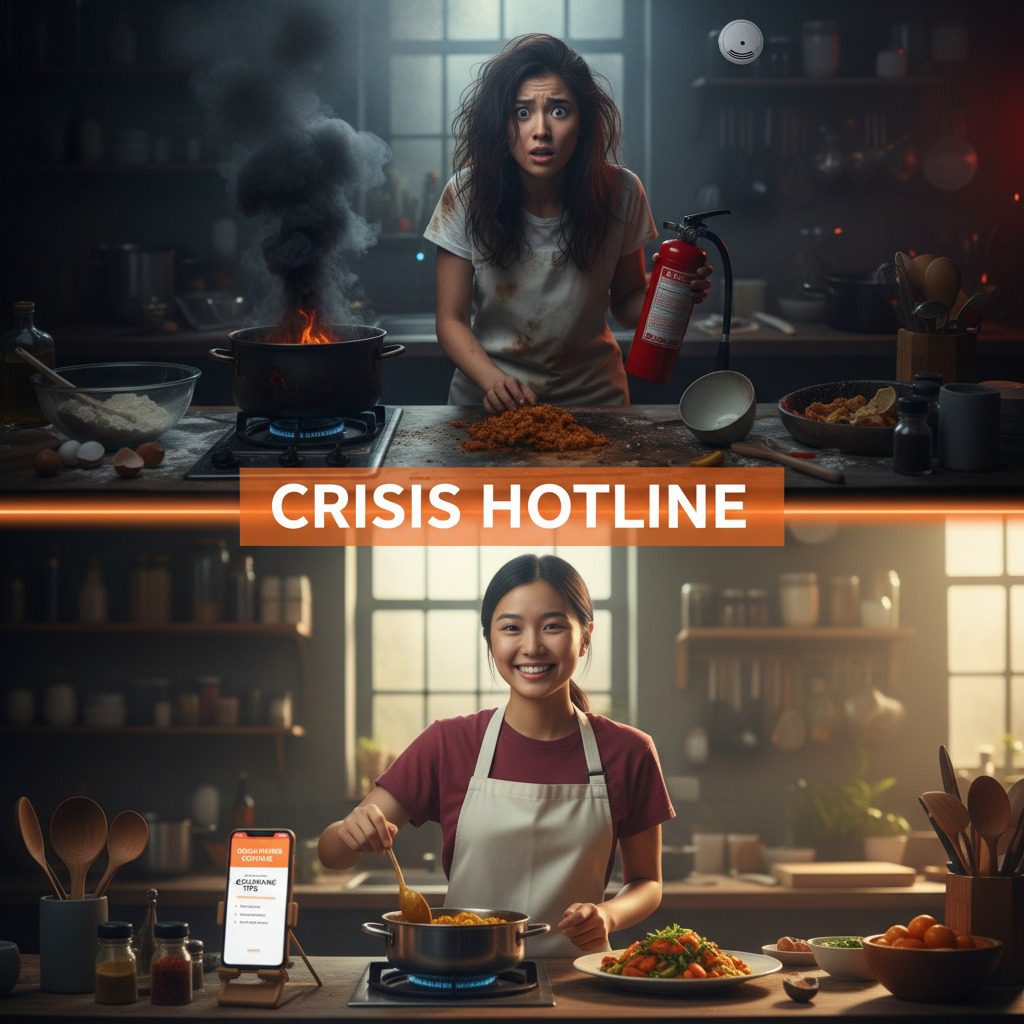
Cooking Crisis Hotline 24/7 Kitchen Emergency
Quick Summary
This article introduces a lifeline for anyone who’s ever panicked over a cooking disaster while living far from home. The Cooking Crisis Hotline is a free AI-powered emergency support system where you can text or send photos of your kitchen disasters and get instant rescue instructions from an AI chef available 24/7, no judgment, just help.
Whether you’ve burnt your rice, overcooked pasta into mush, or have no idea what to do with that ingredient you accidentally bought, this hotline has your back. It’s specifically designed for international students and migrant workers who are cooking alone for the first time, dealing with unfamiliar kitchens, and missing the people who used to help them figure this stuff out.
You’ll learn how to use the hotline, see real crisis examples, understand why having emergency cooking support matters when you’re far from home, and get practical information about saving money while feeding yourself properly. Plus, we’ve included actual rescue recipes and cost comparisons.
🔥 Cooking Crisis Hotline
24/7 Kitchen Emergency Support • Real-Time AI Chef Assistance
What’s Your Kitchen Emergency?
Chef’s Emergency Response
Introduction: The 3 AM Cooking Panic Nobody Talks About
So it’s Tuesday night. You’re tired, hungry, and just wanted to make something simple.

Rice. Just rice.
But somehow and you’re not even sure how the bottom is completely burnt, stuck to the pot, and your tiny dorm room smells like a campfire. The smoke alarm almost went off. Your roommate gave you a look. And now you’re standing there, holding a wooden spoon, genuinely wondering if you should just order takeout again even though you really, really can’t afford it this week.
Sound familiar?
Here’s the thing nobody tells you before you move abroad: cooking becomes this weird source of stress when you’re alone. Back home, you could yell “Mom, the rice is burning!” or text your sister “Help, what do I do?” But here? It’s 3 AM back home. Your family’s asleep. Your friends don’t get it. And Google just gives you seventeen different answers that all contradict each other.
That’s where the Cooking Crisis Hotline comes in.
Think of it as your emergency kitchen friend who never sleeps, never judges, and always knows what to do when things go sideways. You text your problem, maybe send a photo, and within seconds you get actual rescue instructions. Not generic cooking advice specific help for your specific disaster, right now.
And honestly? Sometimes that’s the difference between eating a decent meal and spending money you don’t have on food that doesn’t even taste like home.
Why You Need Emergency Cooking Support (More Than You Think)
Let’s be real about something most cooking blogs won’t tell you.
When you’re living abroad, cooking isn’t just about food. It’s tangled up with being homesick, lonely, overwhelmed, and constantly tired from navigating a world that operates in a different language, with different rules, where even buying groceries feels like a small victory some days.
The Emotional Weight of Cooking Alone
I’ve talked to hundreds of international students and migrant workers. Know what they tell me? The hardest part isn’t the studying or the working it’s the evenings. Coming home to an empty apartment. Cooking for one. Eating alone while everyone back home is together.
And when your cooking goes wrong when that meal you were counting on turns into a disaster it hits different. It’s not just “oops, burnt toast.” It feels like one more thing you can’t get right in this new place.
That’s why emergency cooking support matters. Not just for the food, but for that moment when someone (even an AI someone) says “Hey, this is fixable. Here’s exactly what to do.”
It’s a small thing that feels big when you’re far from home.
The Practical Side: You’re Probably Winging It
Here’s another truth: most of us learned to cook by watching our families. Not from recipes, but from standing next to someone who’d show us when the oil was hot enough, how the onions should smell, what “done” actually looks like.
But now you’re alone, trying to reverse-engineer your grandmother’s rice or figure out why your pasta always comes out wrong, and there’s nobody to ask. So you wing it. And sometimes it works, but often it doesn’t, and then you’re eating cereal for dinner again because you just can’t deal.
The crisis hotline fills that gap. It’s not trying to teach you to become a chef it’s helping you survive, cook decent meals, and stop wasting money on disasters.
How the Cooking Crisis Hotline Actually Works
Okay, let’s get practical. Here’s how this thing works, step by step.
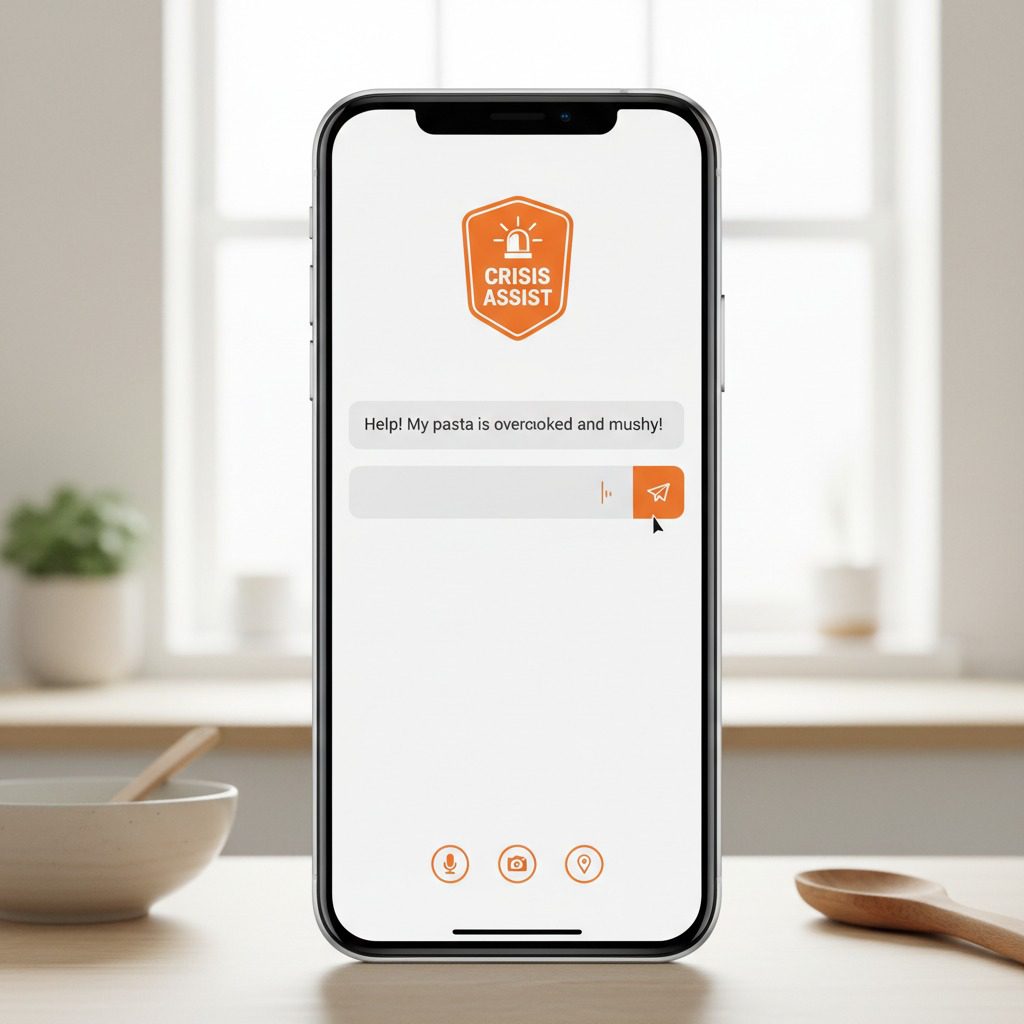
Step 1: Describe Your Crisis
Open the hotline (it’s a simple web form, works on any phone or computer). Type what’s going wrong. Be specific or be vague—both work.
Examples:
- “I burnt the bottom of my rice and it smells terrible”
- “My pasta is mushy and I don’t know what happened”
- “Help! Something is smoking in my microwave”
- “I don’t have eggs for this recipe, what can I use?”
Just explain the problem like you’re texting a friend. The AI understands normal language, panic typing, all of it.
Step 2: Upload a Photo (Optional)
This is actually super helpful. Take a quick photo of your disaster. Burnt pot? Collapsed cake? Mystery situation you don’t even know how to describe?

The AI can look at the photo and give you better advice because it can actually see what you’re dealing with. It’s like having a chef look over your shoulder and go “Ah, I see what happened there.”
But if you don’t want to upload a photo, that’s totally fine. Text alone works too.
Step 3: Get Your Emergency Response
Within seconds seriously, seconds you get a detailed response from the AI chef. It includes:
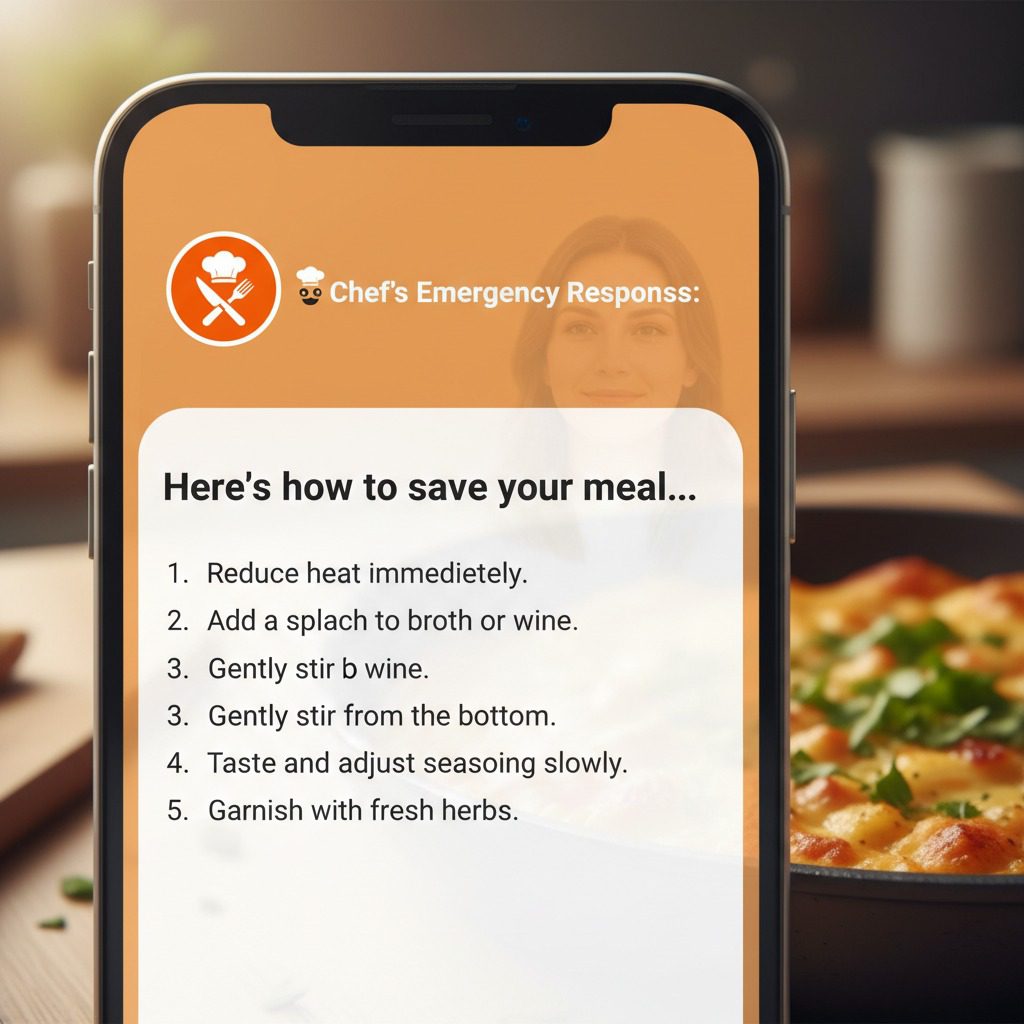
- What probably went wrong (so you understand)
- Step-by-step rescue instructions (specific to your situation)
- Alternative solutions (if the meal can’t be saved)
- Tips to prevent it next time (practical stuff, not lectures)
The responses are written like a real person is helping you. Clear, encouraging, and focused on solutions.
Step 4: Ask Follow-Up Questions
Confused about something? Don’t understand a step? The hotline keeps track of your conversation, so you can ask follow-up questions and it remembers what you’re working on.
It’s like having a conversation with someone who’s actually helping you solve this, not just giving you a generic recipe from the internet.
Real Crisis Examples (Because These Happen to Everyone)
Let me share some actual scenarios where the crisis hotline saves the day.

Crisis #1: The Burnt Rice Disaster
The Problem: “The bottom of my rice is completely burnt and stuck to the pot. Can I save the rest?”
The Rescue: Yes! Here’s what the hotline tells you:
- Immediately turn off the heat
- Transfer the unburnt rice to a new bowl using a spoon (don’t scrape the bottom)
- Don’t stir—stirring will mix the burnt taste throughout
- The top portion is usually fine and will taste normal
- For the pot: fill it with water and dish soap, let it soak overnight
The Result: You save half the rice, have something to eat, and don’t ruin your pot.
See? Not perfect, but salvageable. That’s the whole point.
Crisis #2: The Overcooked Pasta Situation
The Problem: “My pasta is really soft and mushy. I think I cooked it too long. Is it ruined?”
The Rescue: The hotline explains that yes, it’s overcooked, but here’s how to make it work:
- Drain it immediately to stop cooking
- Rinse with cold water to remove excess starch
- Toss it with olive oil to prevent sticking
- Use it in a baked pasta dish or stir-fry where the texture matters less
- Add bold sauce—strong flavors help compensate
The Result: Not ideal, but you turn it into a decent meal instead of throwing it away.
Crisis #3: The Missing Ingredient Panic
The Problem: “The recipe needs eggs but I don’t have any. Can I still make this?”
The Rescue: Depends what you’re making, and the hotline asks. Then it gives you specific substitutions:
- For cakes: mashed banana, applesauce, or yogurt
- For binding (like burgers): breadcrumbs soaked in milk
- For coating: milk or water works
- For breakfast: honestly, just make something else
The Result: You adapt the recipe or pivot to something that works with what you have.
Why This Matters More When You’re Far From Home
There’s a reason I keep bringing up the international student and migrant worker experience. Because cooking problems hit different when you’re isolated.
The Loneliness Factor
Cooking for yourself in a foreign country can be incredibly lonely. You’re used to kitchens full of people, conversation, someone checking if the food tastes right. Now it’s just you, a tiny kitchen, and the sound of your own cooking.

When something goes wrong, that loneliness gets heavier. There’s nobody to laugh it off with. Nobody to help fix it. Nobody to order pizza with and forget about the disaster.
The crisis hotline doesn’t replace human connection nothing does. But it provides a form of support when you need it most. It’s proof that someone thought about your situation and built something to help.
That matters.
The Homesickness Connection
Food is connected to home in ways that are hard to explain. When you’re trying to recreate a dish from back home and it doesn’t work out, it’s not just a cooking failure. It’s a reminder of how far away you are from the people and places that feel familiar.
The crisis hotline helps you succeed more often, which means you get to experience those small moments of comfort eating something that tastes like home, even if you made it in a tiny apartment on the other side of the world.
The Money Stress
Let’s talk about the practical reality. When you burn dinner and order takeout instead, that’s $10-15 you didn’t plan to spend. When that happens twice a week, it’s $100 a month. Over a year? You’ve spent over $1,000 on backup meals because cooking didn’t work out.
The crisis hotline helps you save meals instead of replacing them. That’s real money staying in your account.
The Technology Behind Your Kitchen Lifeline
You don’t need to understand how it works to use it, but here’s the basic idea since some people are curious.
It’s Powered by AI (But Feels Human)
The hotline uses Google’s Gemini AI, which is trained on millions of cooking resources, recipes, and problem-solving scenarios. When you describe your crisis, it understands the context, analyzes the problem, and generates specific solutions.
But here’s what makes it different from just Googling: it’s designed specifically for crisis situations. The AI is prompted to be:
- Solution-focused (not preachy)
- Encouraging (not judgmental)
- Specific (not generic)
- Practical (not perfectionist)
It knows you’re stressed, possibly hungry, and need help now not a lecture about proper cooking technique.

Your Privacy Is Protected
Important stuff: your conversations aren’t stored. The AI processes your question, gives you an answer, and that’s it. No permanent record. Store no data mining. No selling your information.
You need to provide your own Google Gemini API key (free to get), which means:
- Your questions go directly to Google’s AI
- Nobody else sees your cooking disasters
- It’s completely private
- No subscription or account needed
It Works on Any Device
Phone, tablet, computer doesn’t matter. It’s just a web page. No app to download, no special software. If you can text and take photos, you can use the crisis hotline.
Works worldwide, any time zone, any language (though responses are in English currently).
Cost Breakdown: How Much You Actually Save
Let’s talk real numbers because this matters when you’re on a tight budget.
Monthly Cooking Crisis Costs
| Scenario | Frequency | Cost Per Time | Monthly Cost | Annual Cost |
|---|---|---|---|---|
| Disaster → Order Takeout | 2x/week | $12 | $96 | $1,152 |
| Disaster → Throw Away & Restart | 2x/week | $8 | $64 | $768 |
| Disaster → Skip Meal Entirely | 1x/week | $5 (wasted ingredients) | $20 | $240 |
| Using Crisis Hotline to Save Meals | As needed | $0 | $0 | $0 |
| Successful Home Cooking | Regular meals | $2-4 | $180-240 | $2,160-2,880 |
The Real Savings Calculation
Without Crisis Hotline:
- Regular home cooking: $200/month
- Crisis-triggered takeout: $96/month
- Wasted ingredients: $20/month
- Total: $316/month
With Crisis Hotline:
- Regular home cooking: $200/month
- Saved disasters: $0 (meal rescued, eaten as planned)
- Wasted ingredients: minimal
- Total: $200/month
Savings: $116/month = $1,392/year
That’s a plane ticket home. These video calls without worrying about minutes. That’s breathing room in your budget.
Comparison: Homemade vs. Takeout by Meal
| Meal | Homemade Cost | Takeout Cost | Savings | Time Difference |
|---|---|---|---|---|
| Rice Bowl with Egg & Veggies | $2.50 | $10-12 | $7.50-9.50 | +15 min cooking |
| Pasta with Sauce | $2.00 | $12-15 | $10-13 | +20 min cooking |
| Stir-Fry | $3.50 | $11-14 | $7.50-10.50 | +15 min cooking |
| Soup | $3.00 | $8-10 | $5-7 | +25 min cooking |
| Sandwich | $2.50 | $8-10 | $5.50-7.50 | +5 min making |
The time difference is real, but so is the money difference. And with the crisis hotline helping you succeed more often, cooking feels less risky.
Quick FAQ: Your Actual Questions Answered
Q: Is this actually free to use?
Yes and no. The website/tool is free. But you need a Google Gemini API key, which is free to get from Google and includes 1,500 free requests per day. For most people using it for cooking emergencies, that’s more than enough and costs nothing.
Q: What if I don’t know how to describe what went wrong?
Just explain it however you can. “Something’s wrong with my rice” works. “This smells bad” works. “Help?” works. You can also just upload a photo and say “What do I do?” The AI is pretty good at figuring it out.
Q: Will it judge me for messing up basic stuff?
Nope. That’s literally the point no judgment. Everyone burns rice. Someone overcooks pasta. Everyone has kitchen disasters. The AI’s programmed to be helpful, not condescending.
Q: Can it help with recipes from my home country?
It depends. The AI knows a lot about international cuisines, but it’s better at solving problems than recreating specific traditional dishes. If you explain what you’re trying to make and what went wrong, it can usually help troubleshoot. For authentic recipes, though, you might need resources from home.
Q: What if the AI gives bad advice?
It’s trained on reliable cooking information, but it’s still AI—not perfect. Use common sense. If something seems dangerous or wrong, don’t do it. The hotline is for guidance, not gospel. That said, in my testing, the advice has been solid for common cooking crises.
Q: Can I use it for meal planning or regular recipes?
You can, but it’s really designed for emergency help. There are better resources for meal planning and recipe browsing. This is for “help, something’s actively going wrong right now” situations.
Q: Does it work if I have dietary restrictions?
Yes! Tell it your restrictions when asking for help. “I’m vegetarian, what can I substitute?” or “I can’t have dairy, alternatives?” It adjusts advice based on what you tell it.
Q: I feel awkward asking for help with cooking. Is that normal?
Completely normal, and you shouldn’t feel comfortable. Cooking is a learned skill. Most people learned from family over years. You’re learning alone in a foreign country. That’s hard. Asking for help is smart, not backdated.
Nutrition Quick Facts for Students & Workers Abroad
You’re probably not eating as well as you should. No judgment it’s hard to prioritize nutrition when you’re stressed, busy, and far from home. But here’s what your body actually needs and how cooking at home (even with occasional crises) helps.
Why Home Cooking Beats Takeout Nutritionally
Portion Control: Restaurant/takeout portions are usually 2-3 times what you need. At home, you serve yourself reasonable amounts.
Less Sodium: Takeout food is loaded with salt. Your home cooking, even if imperfect, typically has 50-70% less sodium.
More Vegetables: When you cook, you can add veggies easily. Takeout meals often have token vegetables at best.
Better Quality Ingredients: You know what’s in your food. No mystery oils, no additives, no ingredients you can’t pronounce.
Balanced Macros: Home cooking naturally balances proteins, carbs, and fats better than convenience food.
Quick Nutrition Wins for Busy People
You don’t need perfect nutrition. You need good enough to stay healthy, focused, and not get sick. Here’s what matters:
Daily Basics (Minimum):
- 1-2 servings of protein (eggs, beans, tofu, meat, fish)
- 2-3 servings of vegetables (frozen counts!)
- 1-2 servings of fruit (or 100% juice)
- Whole grains when possible (brown rice, whole wheat)
- Drink water (not just coffee and soda)
Easy Nutrition Boosts:
- Add frozen vegetables to everything (pre-cut, last forever, cheap)
- Keep eggs on hand (protein, nutrients, fast to cook)
- Buy canned beans (protein, fiber, dirt cheap)
- Get a multivitamin (insurance policy for bad eating days)
- Eat breakfast (even if it’s just toast and peanut butter)
Warning Signs You Need Better Nutrition:
- Constantly tired beyond normal stress
- Getting sick frequently
- Hair/nails becoming brittle
- Trouble concentrating
- Mood swings or feeling very low
If you notice these, you might need to improve your diet or see a doctor. Cooking at home more often usually helps.
Budget-Friendly Nutritious Staples
These ingredients give you maximum nutrition for minimum money:
Proteins:
- Eggs ($3-5 for dozen = 12 servings)
- Canned tuna ($1 per can)
- Dried beans ($1 for multiple servings)
- Peanut butter ($3-5, lasts forever)
Vegetables:
- Frozen mixed vegetables ($2-3 per bag)
- For example Carrots (super cheap, last weeks)
- Cabbage (cheap, versatile, nutritious)
- Canned tomatoes ($1-2 per can)
Carbs:
- Rice ($5-10 for huge bag)
- Pasta ($1-2 per box)
- Oats ($3-4, many servings)
- Potatoes (very cheap per pound)
Others:
- Cooking oil ($5-8, lasts months)
- Soy sauce (flavor + nutrition)
- Garlic and onions (cheap flavor base)
- Salt, pepper, basic spices
With just these basics, you can make dozens of nutritious meals. The crisis hotline helps when they don’t turn out right.
Emergency Recipe Card: One-Pot Rice & Egg Crisis Rescue
Here’s a recipe that’s nearly impossible to mess up, but if you do, the crisis hotline can help. This is your safety net meal—cheap, fast, nutritious, hard to ruin.
Total Time: 20 minutes
Cost Per Serving: $1.50
Servings: 2
Difficulty: Beginner-friendly
Ingredients:
- 1 cup white rice
- 2 cups water
- 2 eggs
- 1 cup frozen mixed vegetables (or any vegetables you have)
- 2 tablespoons soy sauce
- 1 tablespoon butter or oil
- Salt and pepper to taste
- Optional: hot sauce, garlic powder, green onions
Instructions:
- Cook the rice: Put rice and water in a microwave-safe bowl. Microwave on high 5 minutes, then 50% power for 10 minutes. Let sit 5 minutes. (If you mess this up, crisis hotline can help!)
- Microwave vegetables: Put frozen vegetables in a bowl, add 2 tablespoons water, cover with plate, microwave 3-4 minutes until hot.
- Scramble eggs: Crack eggs in a mug, add a splash of water, whisk with fork, microwave 45 seconds, stir, microwave 30 more seconds. (Overcooked? Crisis hotline has fixes!)
- Combine everything: Mix rice, vegetables, and eggs in a bowl. Add soy sauce, butter, salt, and pepper.
- Adjust and serve: Taste it. Need more flavor? Add more soy sauce or hot sauce. Too dry? Add a bit more butter. Too bland? More salt and pepper.
Nutrition Per Serving:
- Calories: 380
- Protein: 14g
- Carbohydrates: 58g
- Fat: 9g
- Fiber: 4g
- Sodium: 650mg (adjust by using less soy sauce)
- Cost: $1.50
Notes
Common Mistakes & Fixes:
Mistake #1: Rice is undercooked and hard
- Fix: Add 1/4 cup more water, microwave 2 more minutes
- Prevention: Next time, use slightly more water or cook a bit longer
Other way to say it #2: Rice is burnt on bottom
- Fix: Don’t stir! Just scoop the good rice off the top. The burnt part stays at bottom.
- Prevention: Lower your microwave power or use shorter cooking time
I took the wrong train #3: Eggs are rubbery
- Fix: Mix them vigorously into the hot rice the moisture softens them
- Prevention: Cook eggs slightly less next time (stop while still a bit wet)
Mistake #4: Everything tastes bland
- Fix: This is the easiest fix! Add soy sauce, salt, garlic powder, or hot sauce
- Prevention: Season as you go, taste before serving
Mistake #5: Vegetables are cold in the middle
- Fix: Microwave the whole bowl for 1 minute to reheat everything
- Prevention: Make sure vegetables are hot before mixing
Why This Recipe Works for Crisis Situations:
- All microwave: No stove needed, harder to burn things
- Flexible: Can substitute almost any ingredient
- One bowl: Less cleanup, less to go wrong
- Filling: Protein + carbs + vegetables = complete meal
- Cheap: Under $2 per serving, uses pantry staples
- Saves well: Leftovers work for lunch tomorrow
Ingredient Substitution Guide:
No eggs?
- Use canned tuna or chicken
- Use beans (add at the end, already cooked)
- Use tofu cubes
- Skip entirely and add more vegetables
No soy sauce?
- Use salt and a tiny bit of vinegar
- Use Worcestershire sauce
- Use chicken bouillon cube dissolved in water
- Use salt and a squeeze of lemon
Unavailable frozen vegetables?
- Use any fresh vegetables, chopped small
- Use canned vegetables (drain first)
- Use just one vegetable (carrots, peas, whatever)
- Skip and add more eggs for protein
Rice didn’t work?
- Use instant rice (faster, more forgiving)
- When the tool is gone pasta instead (cook separately, then mix)
- Use quinoa (same method as rice)
- Use bread make it a scramble sandwich
Making It Your Own:
This is a base recipe. Make it yours by adding:
- Spices from home (curry powder, chili flakes, anything)
- Sauces you like (teriyaki, sweet chili, whatever)
- Protein you prefer (leftover chicken, ham, spam)
- Toppings (sesame seeds, peanuts, fried onions)
- Herbs (cilantro, parsley, green onions)
When to Use the Crisis Hotline:
Even with this easy recipe, things might go wrong:
- Rice is burnt or undercooked
- Eggs exploded in microwave
- Everything is too salty/bland
- Every vegetables are still frozen
- You forgot a step and things are weird
That’s when you pull up the crisis hotline, describe what happened, maybe send a photo, and get specific advice for your situation. Don’t stress just ask for help.
Student Budget Tip:
Make double and save half for tomorrow’s lunch. Reheats perfectly in microwave (1-2 minutes). That’s two meals for $3 total, which is cheaper than one fast food meal.
Homesick Variation:
Add flavors from home. If you’re from somewhere with specific spices or sauces, throw them in. This recipe is just a canvas. Make it taste like what you’re missing.
Conclusion: You Don’t Have to Cook Alone Anymore
Here’s what I want you to remember from this article.
Cooking far from home is hard. Not just technically hard emotionally hard. You’re doing something that used to involve family, conversation, and help, and now you’re doing it alone in a small kitchen in a foreign country where even the grocery stores feel overwhelming.. It can’t bring your family closer. This can’t make you feel less homesick. Can’t solve the deep loneliness that comes with living abroad.
The Cooking Crisis Hotline doesn’t fix everything
But it can help you salvage a burnt pot of rice at 11 PM on a Tuesday.
Even though it can give you confidence that when cooking goes wrong and it will you have somewhere to turn.
It can save you money you desperately need for other things.
And maybe, just maybe, it can make the evenings a little less overwhelming. Because when you successfully rescue a meal instead of ordering expensive takeout again, that’s a small win. Also when you’re far from home, trying to build a life in a place that doesn’t quite feel like yours yet, small wins matter.
So bookmark the hotline. Save the link. Next time something goes wrong in the kitchen and you feel that familiar panic rising—the “I can’t even do this right” feeling remember it’s there.
You’re not alone in this.
Millions of students and workers abroad are in tiny kitchens right now, trying their best. Some are burning rice. Some are overcooking pasta. Others are staring at ingredients they don’t recognize, wondering what they’ve gotten themselves into.
You’re all figuring it out. Sometimes with help. Often through mistakes.
And that’s okay.
The crisis hotline is just a tool. But sometimes the right tool at the right moment makes all the difference between giving up and trying again.
Keep trying. Keep cooking. And when it goes wrong, ask for help.
You deserve to eat well, even when everything else feels hard.
How to Access the Cooking Crisis Hotline
Getting Started (3 Simple Steps):
- Get your free API key:
- Visit: https://makersuite.google.com/app/apikey
- Sign in with Google
- Click “Create API Key”
- Copy your key (starts with “AIza…”)
- Open the hotline:
- The link should be available on your cooking resource site
- Works on any phone, tablet, or computer
- No app download needed
- Save it for emergencies:
- Bookmark the page
- Save the link in your phone
- Share it with other students who might need it
Remember: Your API key is free for 1,500 requests per day (way more than you’ll ever need for cooking emergencies). The service is private your questions aren’t stored or shared.
Final Thought: Although you’re standing in your kitchen, stressed about a cooking disaster, however wondering if you should just give up and order food you can’t afford stop. Take a breath. Pull up the hotline. Describe what went wrong.
Help is there. You’ve got this.
One meal at a time.