
Pot Lid Organizer Pull Out
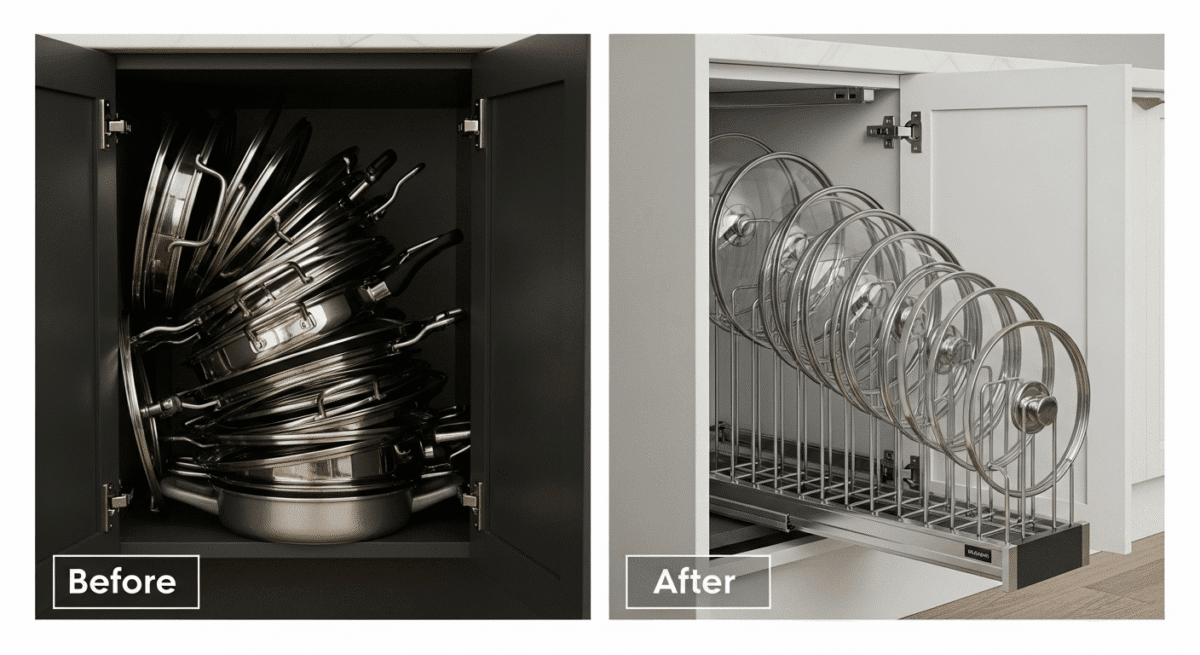
Pot Lid Organizer Pull Out: Stop the Cabinet Avalanche
You open your cabinet and three pot lids crash down on your feet. Then you spend two minutes digging for the right size while everything else falls over. A pot lid organizer pull out system fixes this mess once and for all.
Why Pull Out Organizers Beat Everything Else
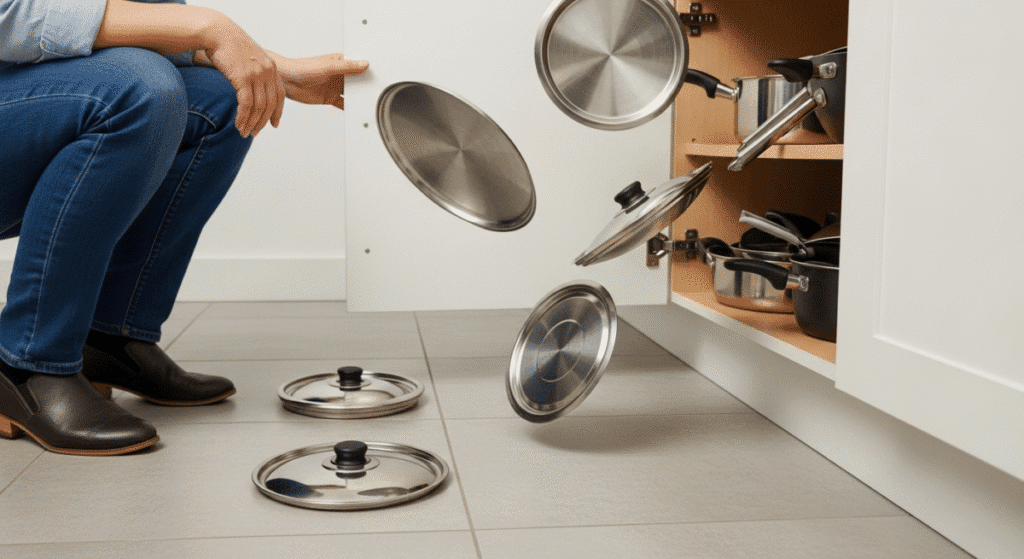
Most people try stacking lids with their pots or jamming them in drawers. Neither works because lids are awkwardly shaped and impossible to organize vertically.
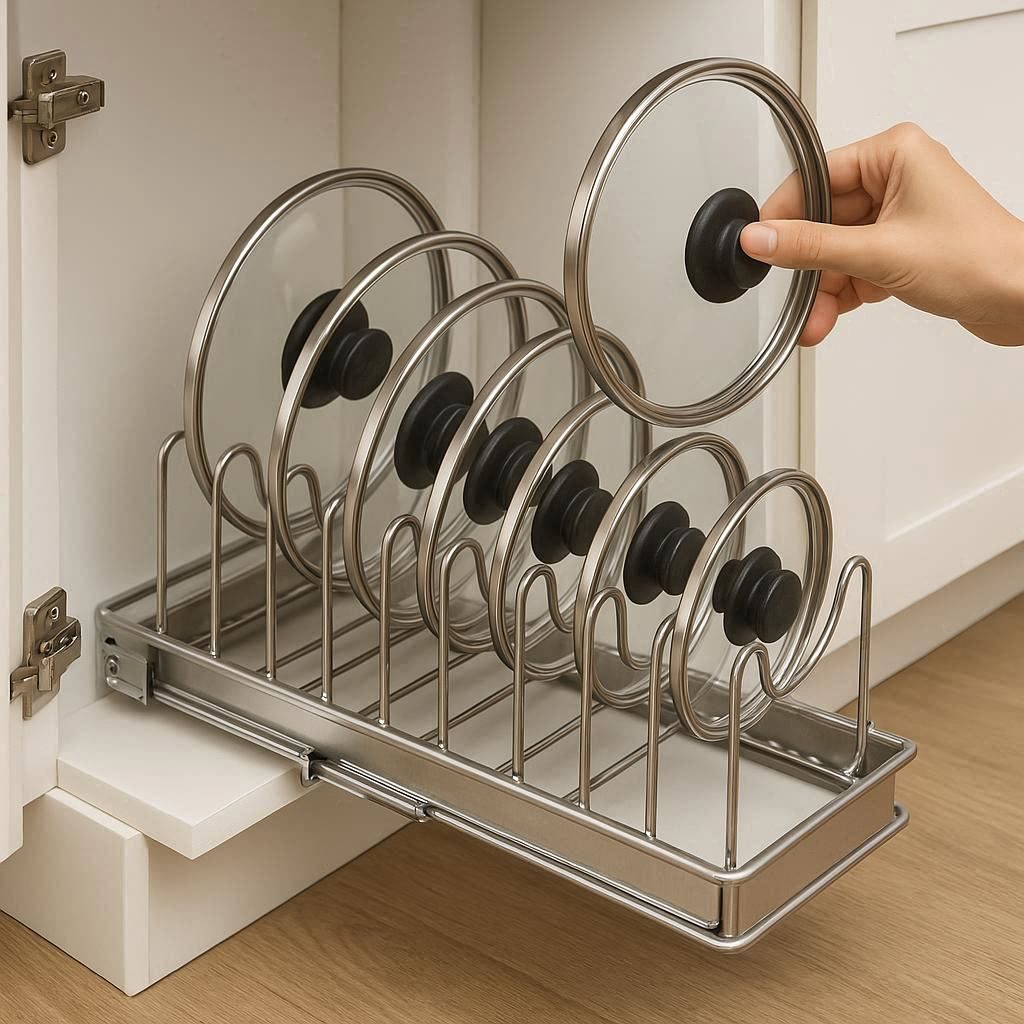
But pull out organizers change the game completely. You slide out the rack, grab exactly what you need, and push it back. No digging, no avalanche, no frustration.
And here’s the best part – you can actually see every lid at once. That saves you from buying duplicates because you forgot what you already own.
Types of Pull Out Lid Organizers
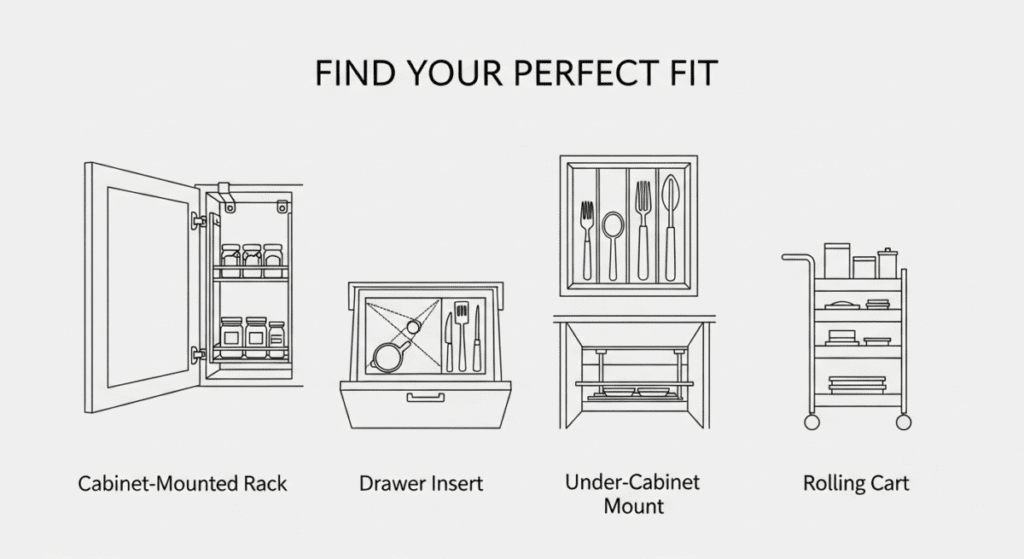
Cabinet-Mounted Pull Out Racks
These attach to the inside of your cabinet door or sidewall. When you open the cabinet, you pull out the entire rack like a drawer.
Installation usually requires drilling a few holes. But once it’s up, the system is rock solid and handles heavy cast iron lids without sagging.
Sliding Drawer Inserts
These sit inside existing drawers and divide the space into vertical slots. Each lid stands upright in its own section.
No installation required beyond placing it in the drawer. That makes them perfect for renters or anyone who doesn’t want to drill holes.
Under-Cabinet Mounted Systems
These mount directly under your upper cabinets or shelves. The rack pulls down or slides out for access.
They work great if you have limited lower cabinet space. Plus, they keep lids off the counter and out of the way until you need them.
Rolling Pull Out Carts
Freestanding units on wheels that tuck into narrow spaces. Pull them out when cooking, push them back when done.
These offer the most flexibility since you can move them anywhere. But they take up floor space and aren’t as secure as mounted options.
What Makes a Great Pull Out Organizer
Smooth Gliding Mechanism
Cheap slides stick and jam when you try to pull them out. Quality ball-bearing slides glide smoothly even when fully loaded.
Test the mechanism before buying if possible. It should extend fully without resistance and close softly without slamming.
Adjustable Dividers
Lids come in all sizes, from tiny 6-inch covers to massive stockpot lids. Adjustable slots mean everything fits properly.
Fixed dividers work okay if they match your lid collection. But adjustable systems adapt as you add or replace cookware.
Solid Construction
Thin wire racks bend under weight. Look for thick gauge metal or sturdy plastic construction that won’t warp over time.
The mounting hardware matters too. Screws should be long enough to grip securely, and brackets should be metal, not plastic.
Easy Access Design
The whole point is convenience, so make sure you can actually reach every slot easily. Deep racks are great for capacity but terrible if you can’t reach the back.
Pull out systems that extend completely beyond the cabinet frame work best. You get full access without awkward reaching.
Installation Guide for Cabinet-Mounted Systems
Measuring Your Space
Measure the inside width, depth, and height of your cabinet. Then measure the space between shelves if your rack mounts vertically.
Don’t forget to account for door hinges and any plumbing that might interfere. A rack that fits on paper but hits the pipes won’t work.
Gathering Your Tools
You’ll need a drill, screwdriver, level, pencil, and measuring tape. Most systems include mounting hardware, but check before you start.
Have a friend help hold the rack in position while you mark holes. This makes installation way easier and more accurate.
Marking Mounting Points
Hold the rack where you want it and use a level to make sure it’s straight. Mark screw holes with a pencil.
Double-check measurements before drilling. It’s easy to fix pencil marks but impossible to undo holes in the wrong spot.
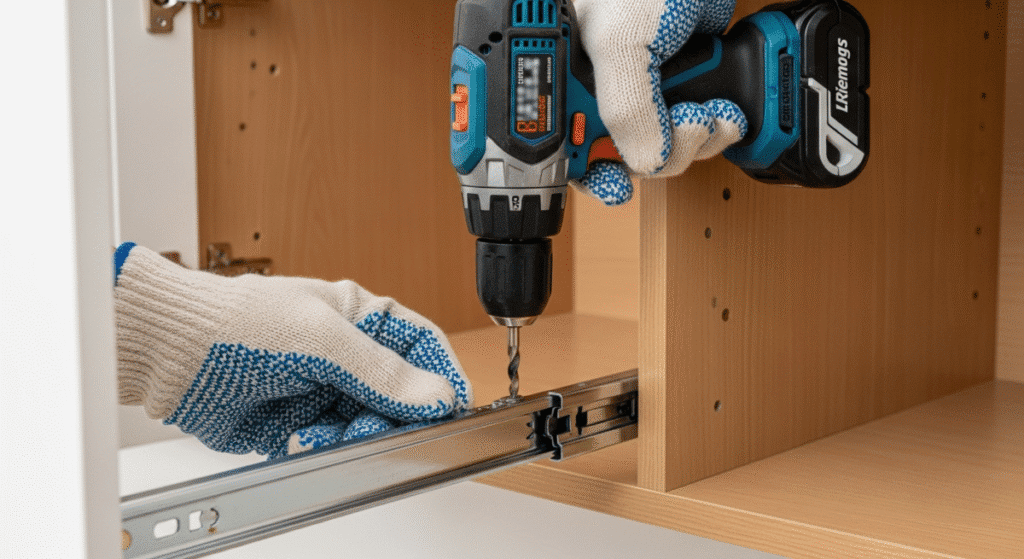
Securing the Hardware
Drill pilot holes slightly smaller than your screws. This prevents the wood from splitting and gives screws better grip.
Attach the slides or brackets first, then hang the rack. Test it by pulling out and pushing in several times before loading lids.
Making Adjustments
If the rack doesn’t slide smoothly, loosen the screws slightly and adjust the position. Sometimes a millimeter makes all the difference.
Load your heaviest lids first to test stability. Better to discover problems now than after you’ve filled it completely.
How to Organize Your Lids Effectively
Sort by Size
Place the largest lids at the back or bottom of the rack. Put frequently used sizes in the most accessible spots.
This system means you rarely need to move multiple lids to get what you want. Everything has its logical place.
Match Lids to Pots
Group lids near their matching pots if possible. Some people use labels or color coding to remember which lid fits which pot.
Over time, you’ll memorize where everything is. But labels help other family members find things without asking.
Leave Room for Growth
Don’t fill every slot right away. Leave a few empty spaces for new cookware or seasonal items like canning pot lids.
Overstuffing makes the rack hard to use and defeats the whole purpose of organized storage.
Regular Decluttering
Every few months, remove lids you never use. Donate or toss anything that doesn’t have a matching pot anymore.
A pot lid organizer pull out system only works if you maintain it. Clutter creeps back in if you’re not careful.
Maintenance and Troubleshooting
Keeping Slides Clean
Dust and cooking grease build up on slides over time. Wipe them down monthly with a damp cloth to maintain smooth operation.
If slides start sticking, clean thoroughly and apply a tiny bit of furniture wax or silicone spray. Just don’t use cooking oil – it attracts more dust.
Tightening Loose Hardware
Screws can loosen with repeated use. Check mounting screws every few months and tighten any that feel loose.
Loose hardware leads to wobbling, which eventually damages both the rack and your cabinet. Catch it early and tighten things up.
Fixing Bent Dividers
Wire dividers sometimes bend if you force oversized lids into too-small spaces. Gently bend them back into shape with pliers.
For badly damaged dividers, contact the manufacturer. Many companies sell replacement parts rather than making you buy a whole new system.
Dealing with Rust
Metal racks can rust in humid environments. If you spot rust early, clean it with white vinegar and a scrub brush.
For prevention, keep the cabinet dry and ventilated. A small packet of silica gel in the cabinet absorbs excess moisture.
Pot Lid Organizer Pull Out: Pros and Cons
The Advantages
Instant Access – Pull out the rack and see everything at once. No digging through stacks or moving multiple items.
Maximizes Space – Vertical storage holds more lids in less space. Your cabinet suddenly has room for other things too.
Prevents Damage – Lids aren’t banging against each other or falling on the floor. They stay in better condition longer.
Looks Professional – Organized cabinets feel like a proper kitchen setup. Everything has its place and looks intentional.
Saves Time Daily – Those 30 seconds you waste hunting for lids add up. Over a year, you’ll save hours of frustration.
The Drawbacks
Installation Required – Most systems need drilling and mounting. That’s intimidating if you’re not handy with tools.
Initial Cost – Quality pull out systems cost more than simple standing racks. But they last longer and work better.
Limited Flexibility – Once mounted, you can’t easily move the system to a different cabinet without new holes.
Size Constraints – Your cabinet dimensions limit which systems will fit. Custom cabinets might need custom solutions.
Learning Curve – Family members need to adapt to the new system. Expect some confusion at first about where things go.
Frequently Asked Questions
How much weight can pull out lid organizers hold?
Quality systems handle 30-50 pounds easily. That’s more than enough for typical lid collections including heavy cast iron covers.
But check the manufacturer’s specifications. Cheaper models might only support 15-20 pounds before the slides start failing.
Can I install these myself or do I need help?
Most people can install them with basic tools and moderate DIY skills. The process takes 30-60 minutes depending on the system.
However, if drilling into cabinets makes you nervous, hire a handyman. Installation usually costs $50-100 and ensures everything is level and secure.
Will this work in older cabinets?
Yes, as long as the cabinet structure is solid. Older cabinets sometimes have thinner wood that requires careful drilling to avoid splitting.
You might need longer screws or different mounting hardware for unusual cabinet construction. But there’s usually a way to make it work.
Do these systems work for glass lids?
Absolutely. In fact, glass lids benefit even more from organized storage since they’re fragile and chip easily when stacked.
Just make sure the dividers have rubber or foam padding to prevent scratching. Some systems include protective strips specifically for glass.
How do I clean lids stored in pull out racks?
Pull out the rack and wipe down each lid right there. Or remove lids as needed for deep cleaning in the sink.
The rack itself needs occasional cleaning too. Wipe it down monthly to prevent grease buildup that makes pulling difficult.
Can renters use these without damaging cabinets?
Mounted systems require holes, so they’re not ideal for rentals. Instead, use drawer insert organizers that don’t require installation.
Some over-door systems work too, but they’re less stable than mounted options. Check your lease about modifications before drilling anything.
What if my lids don’t fit the dividers?
Adjustable systems let you customize slot sizes. For fixed dividers, measure your lids before buying to ensure compatibility.
Very large lids might need to be stored elsewhere. Most systems handle lids up to 12-14 inches, but giant stockpot lids often exceed that.
How many lids can one organizer hold?
That depends on the system size, but most hold 6-12 lids comfortably. Larger cabinet systems might accommodate 15-20 lids.
Count your current lid collection before buying. It’s better to get a slightly larger system than to run out of space immediately.
Choosing the Right System for Your Kitchen
Consider your cabinet layout first. Deep cabinets work best with pull out systems, while shallow cabinets might need different solutions.
Think about how many lids you actually use regularly. Don’t buy capacity you don’t need just because it’s available.
Read reviews from people with similar kitchens. They’ll mention installation challenges or design flaws specific to certain cabinet types.
Final Thoughts
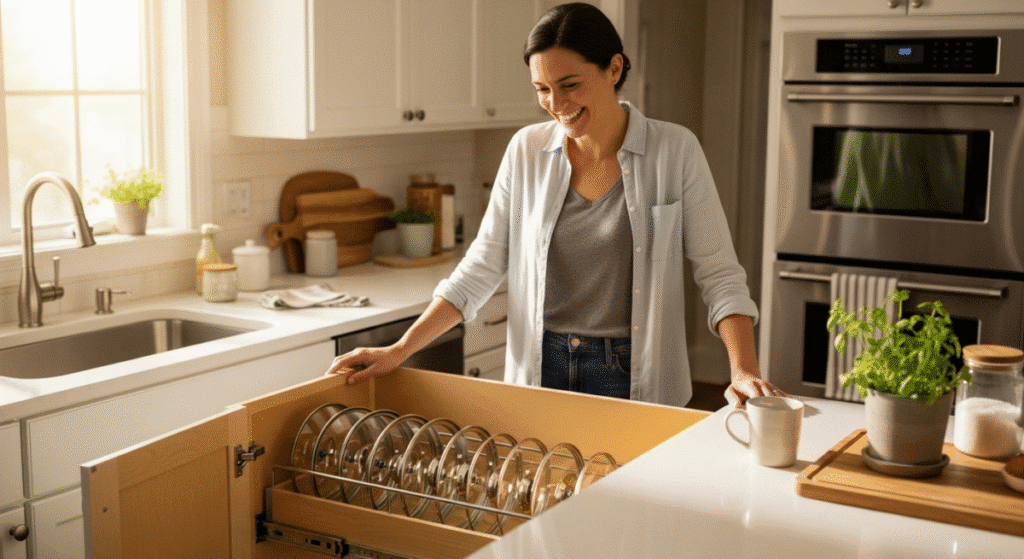
A pot lid organizer pull out system turns chaos into calm. You’ll stop avoiding certain cabinets because you dread the mess inside.
Now you know what features matter, how to install them, and which type works for different situations. So pick a system that fits your space and skill level.
Ready to open your cabinet without fear of falling lids?