
Best Instant-Read Thermometer
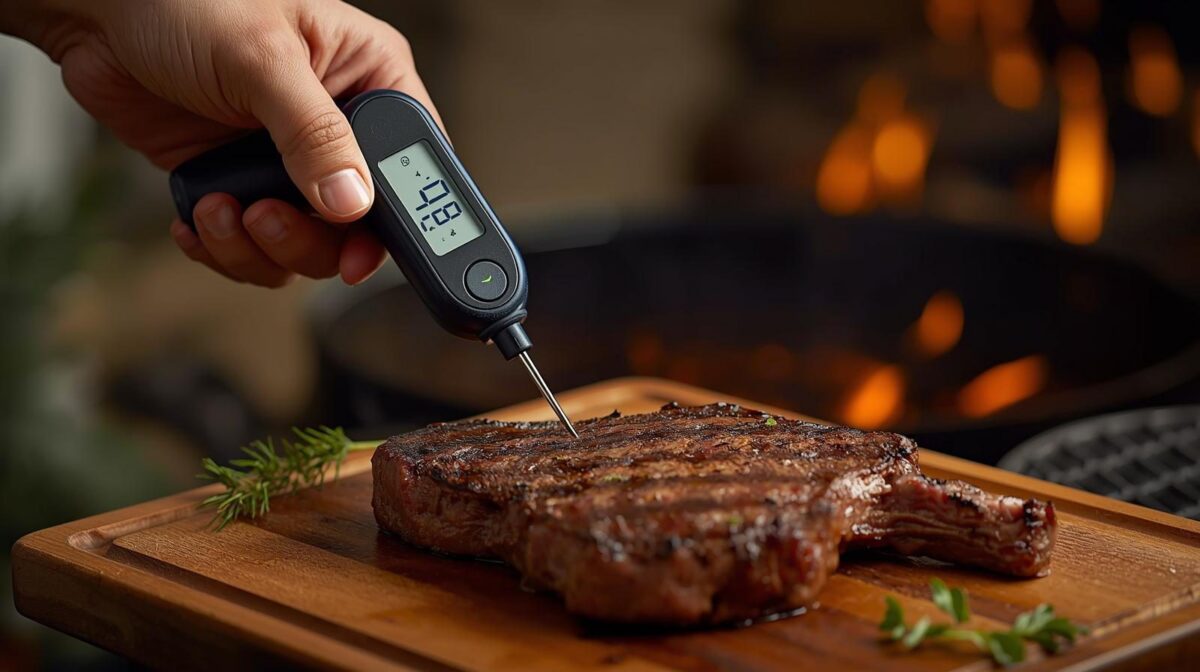
Best Instant-Read Thermometer: Your Guide to Perfect Cooking Every Time
You’ve probably overcooked a steak or undercooked chicken before. It happens to everyone, and honestly, guessing temperatures is just stressful. That’s exactly why finding the best instant-read thermometer matters more than you think.
Why You Actually Need an Instant-Read Thermometer
Look, cutting into meat to check doneness ruins the presentation. Plus, you lose all those delicious juices. An instant-read thermometer solves this problem in seconds.
You’ll cook with confidence instead of anxiety. No more dry chicken breast or risky undercooked pork. And when you’re hosting dinner, that peace of mind is priceless.
But here’s the thing – not all thermometers are created equal. Some take forever to read. Others break after a few months. That’s why we’re breaking down what actually matters.
What Makes the Best Instant-Read Thermometer
Speed Really Matters
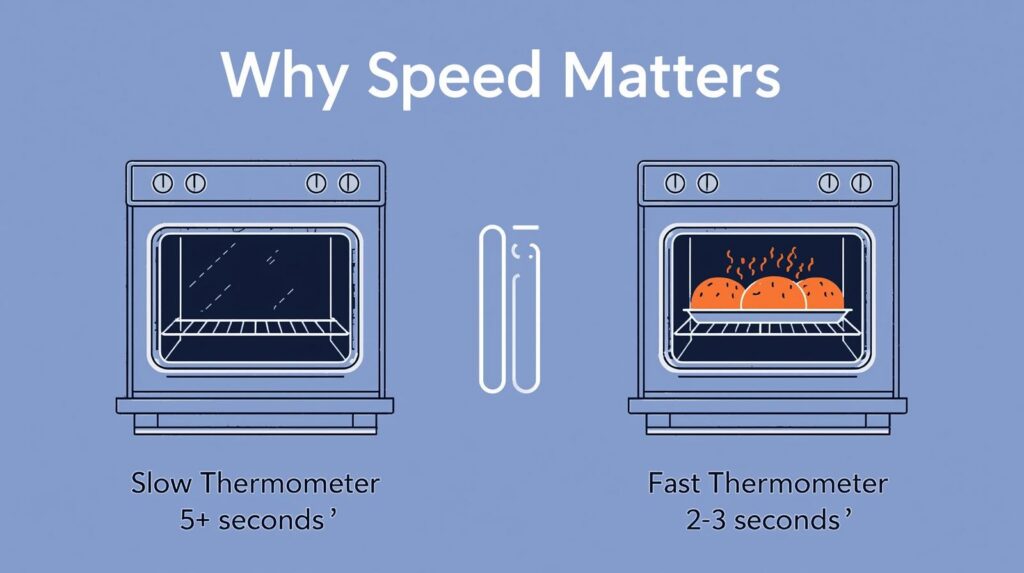
The best instant-read thermometer gives you accurate readings in 2-4 seconds. Anything slower, and you’re losing heat from your oven or grill every time you check.
Fast readings also mean less time with the oven door open. So your cooking environment stays consistent, and your food turns out better.
Accuracy You Can Trust
Here’s what most people don’t realize – a thermometer that’s off by even 5 degrees can ruin your meal. The best models stay accurate within 1-2 degrees.
Look for thermometers with calibration features. That way, you can adjust them if they drift over time. It’s a small detail that makes a huge difference.
Build Quality That Lasts
Cheap thermometers break fast. The probes bend, the screens crack, and suddenly you’re buying another one.
Waterproof models handle kitchen accidents better. And a sturdy probe won’t bend when you’re checking a thick roast. Plus, a good warranty tells you the company stands behind their product.
How to Use a Meat Thermometer Correctly
Most people stick the thermometer in the wrong spot. Then they wonder why their readings seem off. Let me show you the right way.
Finding the Right Spot
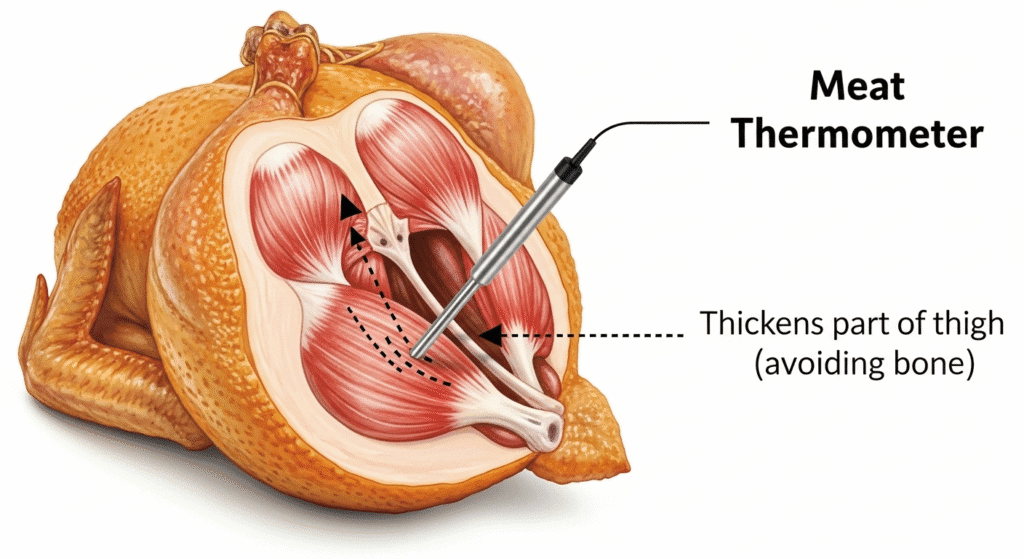
Insert the probe into the thickest part of the meat. But here’s the key – avoid touching bone or fat. Both give you false readings.
For chicken, go for the thigh or the thickest part of the breast. With steak, aim for the center. And for roasts, insert from the side into the middle.
The Proper Technique
Push the probe in at least 1-2 inches deep for accurate readings. If you’re checking something thin like a burger, insert from the side instead of the top.
Wait for the reading to stabilize. Most instant-read thermometers beep or flash when they’re ready. Don’t pull it out too early, or you’ll get an incomplete reading.
Temperature Guidelines That Actually Work
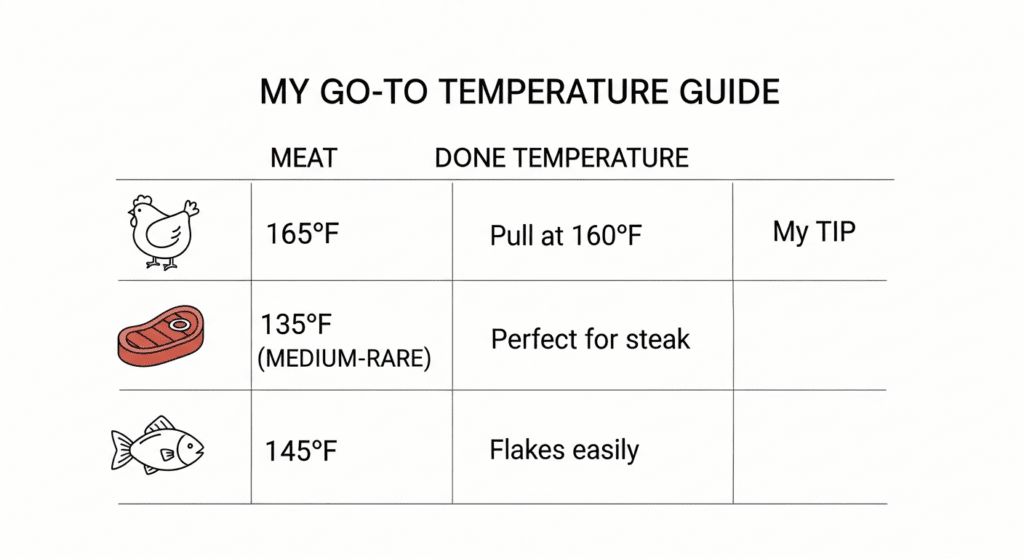
Chicken needs to hit 165°F internal temperature. No exceptions here – food safety matters. But here’s a tip: pull it at 160°F because carryover cooking adds another 5 degrees.
Beef and pork are more forgiving. Medium-rare beef sits at 130-135°F. Medium is 135-145°F. And pork is safe at 145°F, though many people prefer 150°F for better texture.
Fish should reach 145°F. It’ll look opaque and flake easily with a fork. But delicate fish like salmon tastes better at 125-130°F if you trust your source.
Top Features to Look For
Digital Display Quality
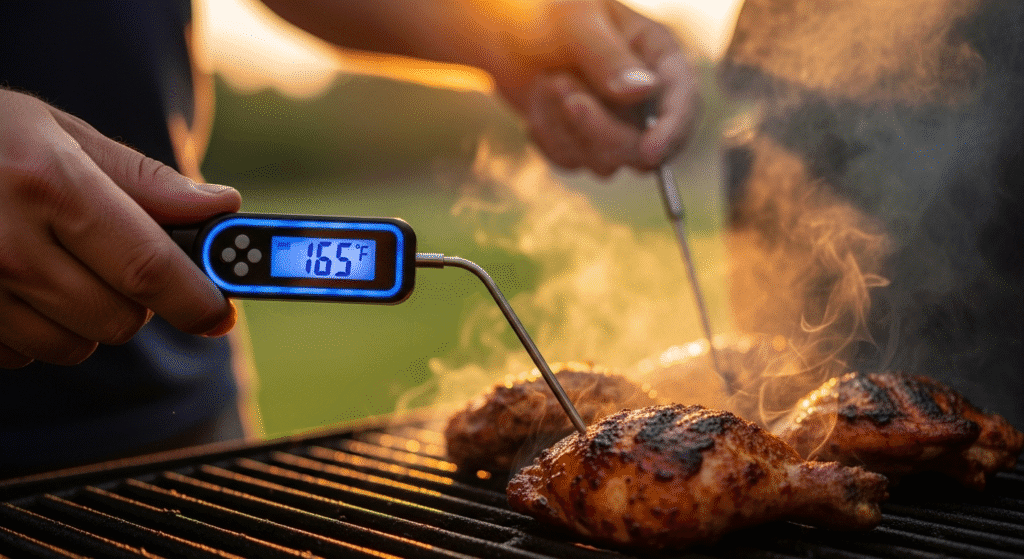
You need to read the screen quickly, even in dim lighting. Backlit displays work great for outdoor grilling at night. Large numbers help too, especially if you wear glasses.
Rotating displays are surprisingly useful. You can read them from any angle without awkward hand positions.
Battery Life and Type
Some thermometers use watch batteries that last forever. Others need AAA batteries you replace more often. Neither is wrong – just know what you’re getting into.
Auto-shutoff saves battery life. But make sure it doesn’t shut off too quickly while you’re still cooking.
Common Mistakes People Make
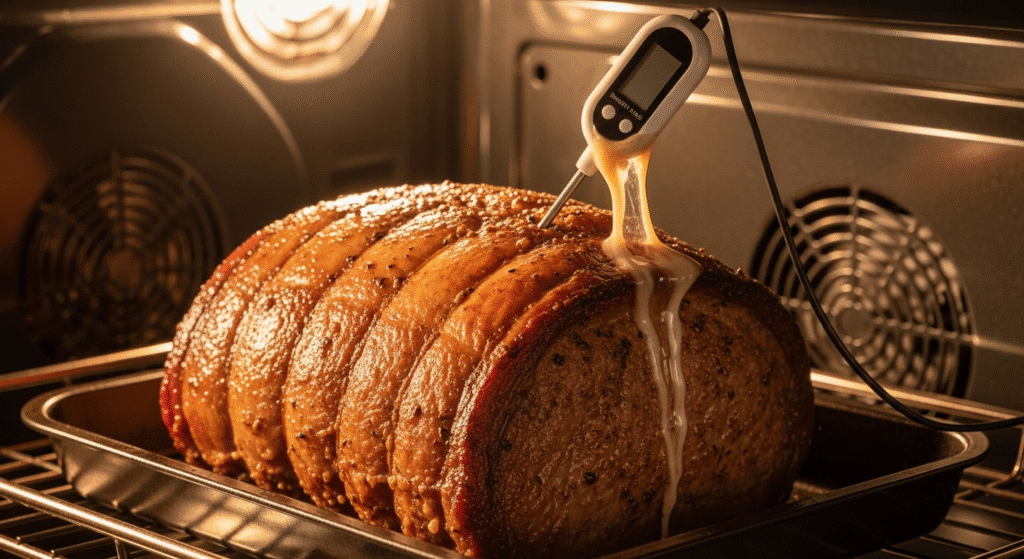
Lots of folks leave their thermometer in the meat while cooking. That’s fine for oven-safe probe thermometers, but instant-read models aren’t meant for that. The heat damages them.
Another mistake? Not cleaning properly. Food particles mess with accuracy over time. Wipe the probe after each use with a damp cloth.
And please, don’t drop it. These devices are precise instruments. A good drop can throw off calibration permanently.
When to Check Temperature
Check chicken and pork near the end of estimated cooking time. Then recheck every few minutes until you hit target temperature.
For steaks, check once after you flip them. Then again after another minute or two. You’ll develop a feel for timing pretty quickly.
Carryover cooking is real. Large roasts can rise 10 degrees after you pull them. So factor that in, or you’ll end up with overcooked meat.
Cleaning and Maintenance Tips
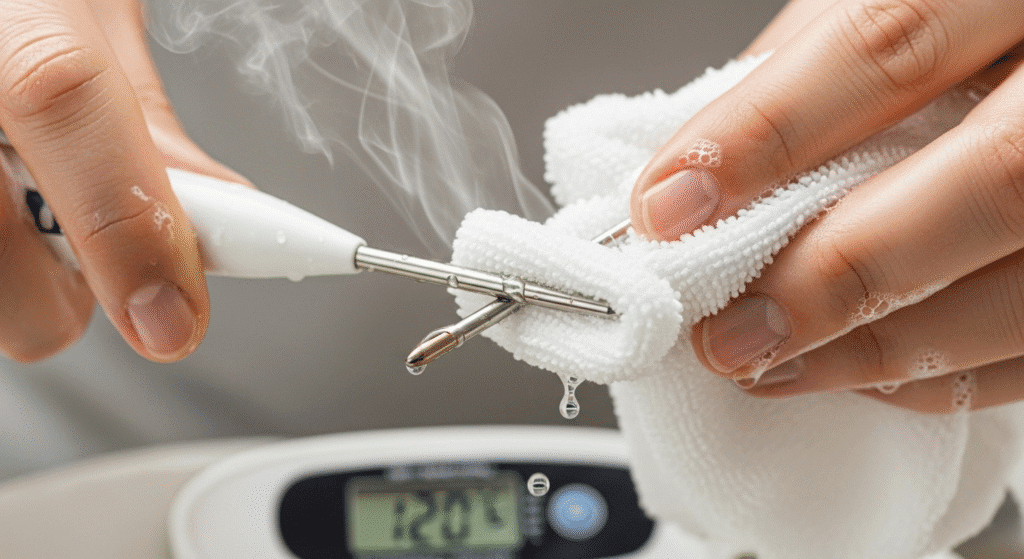
Wash the probe with hot soapy water after each use. Don’t submerge the entire unit unless it’s rated waterproof. Water in the electronics ruins everything.
Check calibration every few months. Most models let you test in ice water – it should read 32°F. If it doesn’t, either calibrate it or replace it.
Store your thermometer in a protective case. Loose in a drawer, the probe bends and the screen cracks. A little protection goes a long way.
Budget vs Premium: What’s Worth It
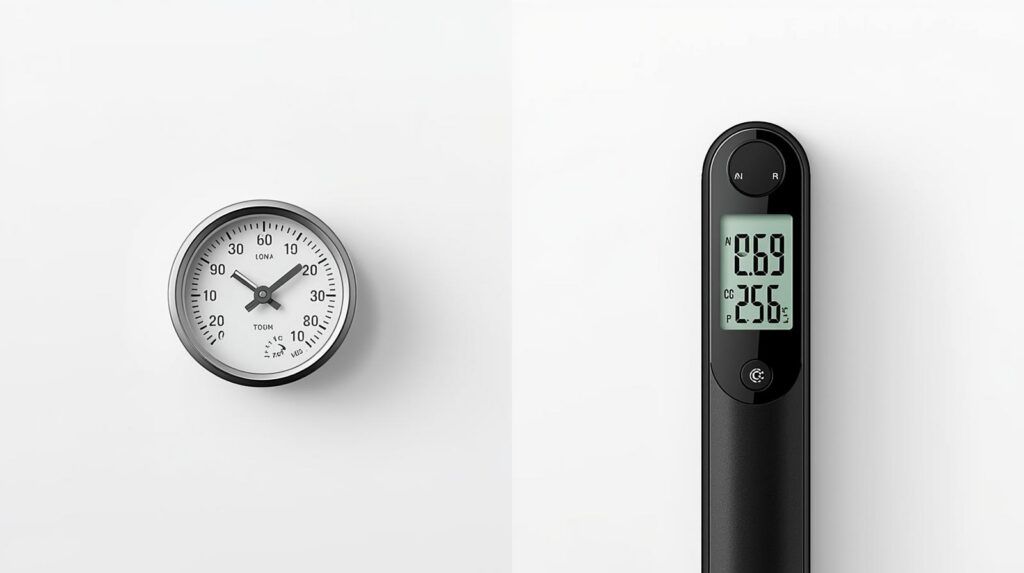
Cheap thermometers under $15 work okay for occasional use. But they’re slower, less accurate, and break faster. If you cook more than once a week, spend a bit more.
Mid-range options ($25-50) offer the best value. You get speed, accuracy, and durability without breaking the bank. These are perfect for home cooks who take their meals seriously.
Premium thermometers ($50+) are worth it for serious grillers and professional cooks. The extra features and build quality pay off when you’re using them constantly.
Making Your Decision
Think about how often you cook. Also consider what you cook most. If you’re grilling every weekend, invest in a quality model with a long probe.
Read reviews from actual users. They’ll tell you about durability issues and real-world performance. Don’t just trust marketing claims.
And honestly, having the best instant-read thermometer takes the stress out of cooking. You’ll make better meals consistently. Your family will notice the difference, and you’ll enjoy cooking more.
Instant-Read Thermometer: Pros and Cons
The Good Stuff
Fast and Accurate – You get readings in seconds instead of minutes. No more standing around with the oven door open.
Prevents Foodborne Illness – You’ll know exactly when meat reaches safe temperatures. That peace of mind is worth everything, especially with kids around.
Saves Money – Stop overcooking expensive cuts. A $30 thermometer pays for itself after saving just a few steaks.
Easy to Use – Even beginners get perfect results. There’s no skill required, just stick it in and read.
Versatile – Works for meat, candy, bread, oil, and even bath water. You’ll find yourself using it more than expected.
The Not-So-Good
Battery Dependency – Dead battery means no reading. Keep spares handy, or you’ll be stuck mid-cook.
Not Oven-Safe – Most instant-read models can’t stay in the oven. You need to open the door repeatedly to check.
Fragile Probes – Drop it once and accuracy suffers. The thin probes bend or break easier than you’d think.
Learning Curve – Finding the right spot takes practice. Your first few attempts might feel awkward.
Calibration Drift – Cheaper models lose accuracy over time. You’ll need to check calibration occasionally.
Frequently Asked Questions
Frequently Asked Questions (Your Quick Rescue Guide)
Do I really need a meat thermometer?
Yes, honestly, you do. It is the single best tool for rescuing you from the stress of guessing. It’s the only way to know for sure that your meat is both safely cooked and perfectly juicy, every single time.
What’s the difference between an instant-read and an oven-probe thermometer?
That’s a great question. An instant-read thermometer is for quick checks. You use it to spot-check the temperature of your food and then you take it out. An oven-probe thermometer has a long, heat-proof cable. You leave the probe in the meat while it’s cooking in the oven, and the display sits outside.
Can I use it for things other than meat?
Absolutely! An instant-read thermometer is a fantastic multi-purpose tool. You can use it to check the temperature of oil for frying, test if your bread is baked through, or even check the temperature of water for making coffee or tea.
How do I know if my thermometer is accurate?
The easiest way to check is with a simple ice water test. Just fill a glass completely with ice and then add a little cold water. Stir it and let it sit for a minute. Then, put your thermometer probe in the middle of the ice water (don’t touch the sides or bottom). After a few seconds, it should read 32°F (0°C). If it doesn’t, it may need to be recalibrated or replaced.
Is it okay to leave my instant-read thermometer in the oven?
No, absolutely not. The electronic body of an instant-read thermometer is not designed to withstand the high heat of an oven or a grill. It will melt and be ruined. You should only insert it to check the temperature and then remove it immediately.
Final Thoughts
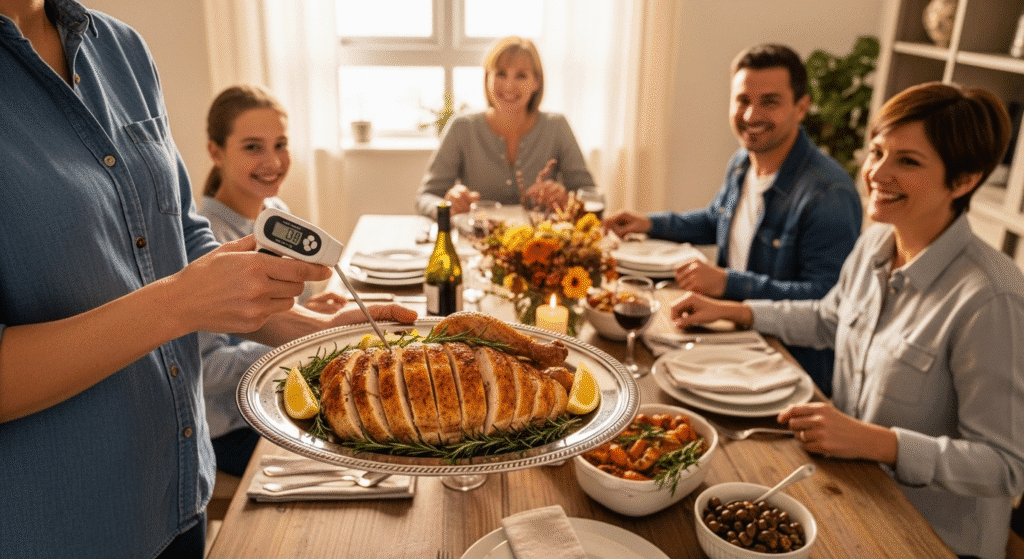
Getting the right thermometer seems simple, but it genuinely changes how you cook. No more guessing, no more anxiety, no more ruined expensive cuts of meat.
Now you know how to use a meat thermometer properly and what features actually matter. So pick one that fits your cooking style and budget.
What’s stopping you from cooking with confidence tonight?
Very detailed and helpful guide!
Thankyou for nice comment!